Pasta Classes with Kids: the Family Options in Florence That Actually Work
Three hours is a long time for a seven-year-old, and the two Florence classes that handle it best do so for completely different reasons.

Short answer
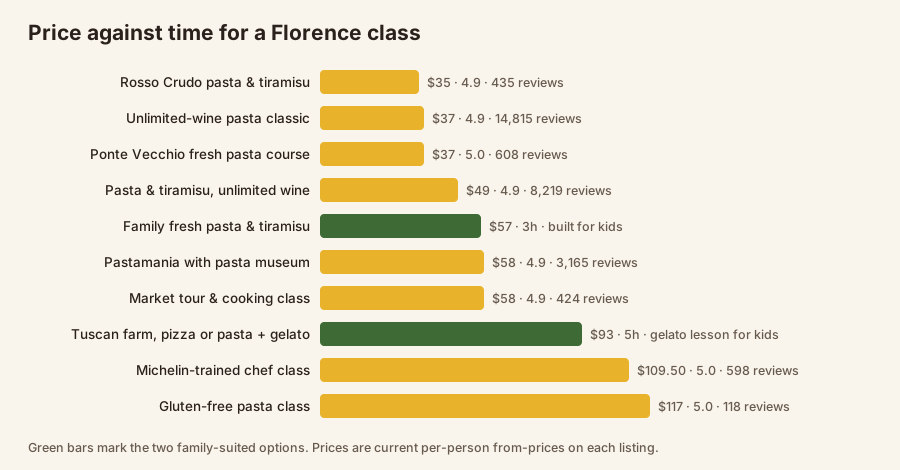
Two options work with children. A $57 family class runs about three hours, pours juice for kids and wine for adults, and makes pasta and tiramisu together. A $93 Tuscan farm day runs roughly five hours door to door with transport included and gelato at the end. Age rules are set per operator.
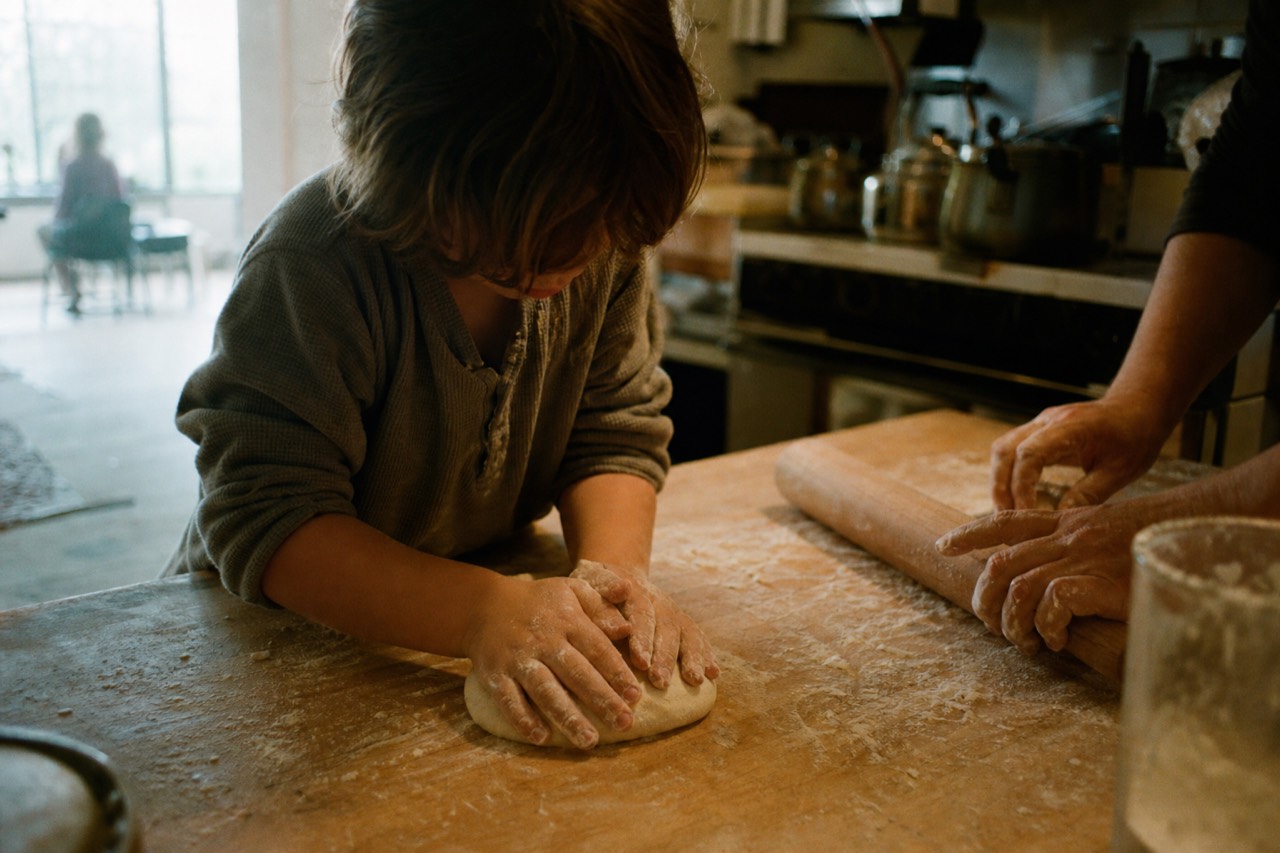
Flour goes everywhere when a six-year-old handles it. Onto the floor, into hair, up one sleeve and out the other, and the moment a chef says the word "tiramisu" you lose their attention for a full minute. Any kitchen that takes children knows this and plans around it. The ones that do not take children plan around adults holding wine glasses, and the difference shows up about forty minutes in.
Only one question decides a family booking: which formats are built so a child has something to do at every stage, rather than fifteen minutes of rolling followed by two hours of waiting. Two Florence classes clear that bar, and they solve the problem in opposite ways.
Which Florence classes are actually built for families?
Two. A $57 family class runs about three hours in the city, makes fresh pasta and tiramisu together, and pours juice for children while adults drink wine. A $93 Tuscan farm day runs around five hours door to door with transport both ways, wine and beer for adults, and gelato at the end.
The family class is the direct answer. It is the only listing in the Florence lineup that is named and built for families rather than merely tolerant of them, and the juice detail matters more than it sounds. A child at a table where every other glass is wine spends the meal being handed water. A kitchen that has thought about the drink has usually thought about the rest.
Now the honest part, because it changes how you should read the number. The family class holds 4.9 across 23 reviews. That is a small sample. Twenty-three people is enough to tell you the format works and not enough to tell you it works every single time, and it puts this listing in a different evidence class from the $37 classic that carries 14,815 reviews. What a 23-review listing usually means is a newer product from a smaller operator, not a weak one. It also means the rating can move a lot on a handful of future bookings. Book it because the format fits your family, not because the number looks like a guarantee.
It is fair to ask why so few listings say the word family at all in a city this saturated with cooking classes. The answer is commercial rather than hostile. The dominant Florence format is a three-hour class with unlimited wine, sold largely to couples and small groups of adults, and adding children changes the bench ratio, the pace and the drinks bill in ways that cut against that product. Operators who want families build a different class rather than bolting kids onto the adult one. That is why the shortlist here is two names long instead of ten, and why the two on it look nothing alike.
The farm day is the other genuinely kid-suited option, and its evidence is much heavier: 4.9 across 1,572 reviews. It works for a completely different reason. Children are not asked to concentrate for three hours in a single room. There is a van ride, a farm, space to move, pizza or pasta depending on the format, and gelato at the end, which is the only dessert in the lineup that a child will negotiate for. The trade is time. Five hours door to door eats a whole day.
| Family Class: Fresh Pasta & Tiramisu | Pizza or Pasta & Gelato at a Tuscan Farm | |
|---|---|---|
| From | $57 | $93 |
| Rating | 4.9 across 23 reviews | 4.9 across 1,572 reviews |
| Length | About 3 hours | About 5 hours door to door |
| Where | In Florence | Tuscan farm, transport from Florence and back |
| What you make | Fresh pasta and tiramisu | Pizza or pasta, plus gelato |
| Kids' drink | Juice | Not listed separately |
| Adults' drink | Wine | Wine and beer |
| Take home | Not listed | Recipes |
| Free cancellation | Up to 24 hours | Up to 24 hours |
| Best for | Younger kids, tight schedules, a half day | Older kids, restless kids, a whole free day |
If your children are small and your schedule is full, the three-hour city class wins on logistics alone. If you have a free day and a child who cannot sit still, the farm buys you movement, and the review count behind it is one of the strongest in the city. You can check live availability for the city option first, since it is the one that fits into an existing itinerary rather than replacing it.
What ages can actually join a hands-on class?
Age rules are set by each operator, not by the city, so the listing is the only authority. As a reference point, one of Florence's established cooking schools takes children from six upward with a parent supervising at the bench. Check the specific listing before you book, every time.
Six is a sensible floor for a reason that has nothing to do with rules. Below about six, hand strength and attention span both run out before the dough does, and the child ends up as a spectator in a room designed for participants. From six to about nine, a child can genuinely do the work if someone stands beside them. From ten upward, most kids can run their own station and will be irritated if you try to help.
The published policy we can point to is specific: a Florence cooking school states that children aged six and over are welcome with parent supervision. Treat that as the shape of the market rather than a universal rule. Some operators go younger with an adult, some set a hard minimum, and a few small-format classes prefer adults only because the bench space does not allow a second pair of hands per station. None of that is published consistently, which is why the message-the-operator step in the booking questions we recommend for special requirements applies just as much to a family booking.
| Age | What they can realistically do | Which format we would pick | Watch out for |
|---|---|---|---|
| Under 5 | Squash dough, sprinkle flour, eat things | Neither, unless the operator explicitly welcomes toddlers | The meal lands well past a normal lunch |
| 5 to 6 | Roll short shapes with help, cut with a blunt tool | City class, three hours, with one adult per child | Confirm the minimum age on the listing first |
| 7 to 9 | Genuinely make a shape start to finish | Either, city class if the day is short | Attention dips hard in the middle hour |
| 10 to 12 | Run their own station, follow a chef's steps | Farm day, more space and more happening | Boredom if the class is aimed at absolute beginners |
| 13+ | Everything an adult does | Either, and they will out-cook you | They may prefer the adult class formats entirely |
| Mixed ages | Depends on the youngest | City class, shorter and easier to abandon | One child's meltdown ends it for everyone |
Treat that table as planning guidance; the listing you are about to pay for has the final word. If it is silent, the message form attached to the booking will get you a written answer inside a day.
What do kids actually do during three hours?
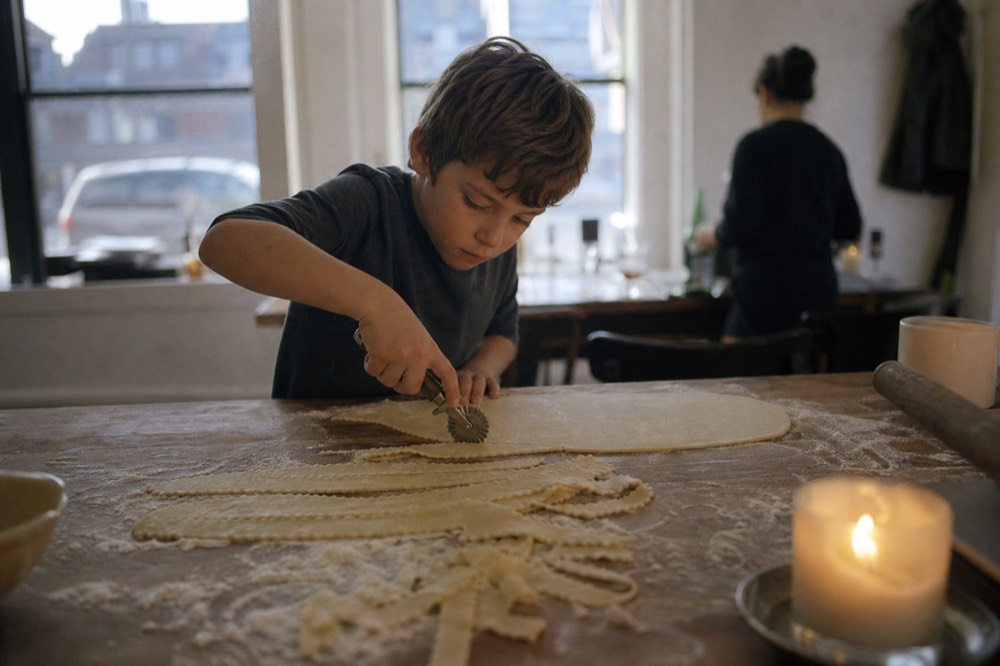
Roughly forty minutes of it is hands-on for a child: mixing, kneading, rolling and cutting, then shaping the dessert. The rest is watching, waiting and eating. Good family classes break the waiting into short pieces. The shapes children handle best are the ones with no machine involved.
The single most useful thing to know before booking is which shape the class makes, because it decides how much a child gets to do. Hand-rolled shapes are pure child labour in the best sense. Pici, the thick Tuscan shape from Siena, is made from nothing but flour, water and oil and rolled between the palms, so a seven-year-old can produce a genuinely correct piece of pasta with no equipment. Pappardelle means rolling a sheet and cutting wide ribbons, which is satisfying and fast. Filled shapes like tortelli involve spooning, folding and sealing, which is fiddly and absorbing and where kids often do their best work.
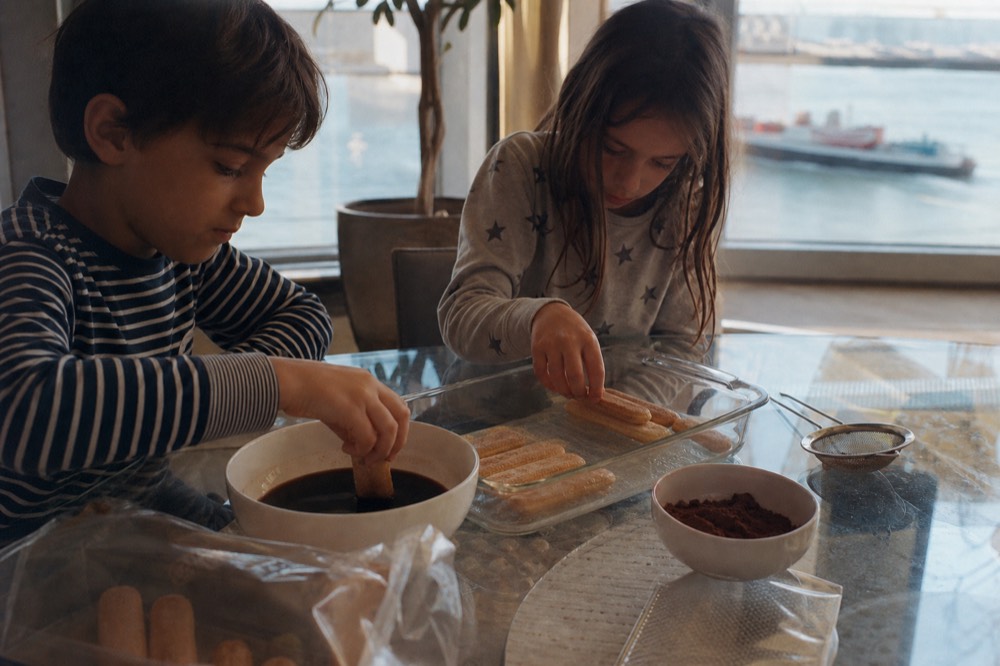
The dessert is the other half of the equation, and it is why the pasta-and-tiramisu format outperforms a pasta-only class with children. Tiramisu is assembly rather than cooking: dip, layer, spread, dust. Nothing is hot, nothing is sharp, and the result is visible immediately. It is also a much younger dish than most people assume, first served at a restaurant in Treviso in 1972, which is a good fact to hand a nine-year-old who thinks everything Italian is ancient.
| Stage of the class | What a child is doing | Attention level | How long it holds them |
|---|---|---|---|
| Welcome and aprons | Being tied into an apron that is too big | High, it is a costume | 5 minutes of pure enthusiasm |
| Mixing the dough | Pouring flour, cracking eggs, making a mess | Very high | The best part of the class for most kids |
| Kneading | Pushing, folding, pushing again | Medium, tiring on small hands | Ten minutes before they hand it over |
| Rolling and cutting | Working a pin, cutting shapes | High if hand-rolled, low if a machine does it | Depends entirely on the shape |
| Sauce or filling | Stirring, tasting, spooning | Medium | Short, but the tasting keeps them near |
| Tiramisu assembly | Dipping, layering, dusting cocoa | Very high | The reliable second wind |
| Sitting down to eat | Eating, and being restless | Low | The hardest 30 minutes of the day |
Read that last row twice. The eating stage is where family classes are won or lost, and it lands after the child has already spent their energy. It is also the stage most listings say nothing about. A class that seats you at a shared table with other guests puts a fidgeting child in a social situation. A class that lets you eat at your own bench does not. If your family is at all unpredictable, ask which one applies before you book, and browse see dates and the current price alongside the special-diet and family classes grouped together.
How does a three-hour class survive naps and meltdowns?
By choosing the slot, not by hoping. A morning class runs into the natural lunch window and finishes before the afternoon crash. An evening class runs straight through a young child's worst hour. With a five-hour farm day, the van ride doubles as the nap, which is the main argument for it.
Florence classes cluster around three to three and a half hours including the meal, which is the norm across 2026 listings and the length both family-suited options run to in the city. Add thirty minutes of travel at each end and a three-hour class is a four-hour commitment. That is a half day, and it should be the only thing you plan for that half day. Families who schedule a museum before a class arrive already spent.
| Clock | Morning class with kids | Evening class with kids |
|---|---|---|
| 60 minutes before | Fed, watered, bathroom done, no big walk | Kids are already tired from a full day |
| Start | Fresh, loud, at their best | Willing, but the tank is half empty |
| First hour | Dough work, peak engagement | Dough work, still fine |
| Second hour | Shaping and sauce, attention dipping | Attention dips faster and further |
| Third hour | Sitting to eat, restless but manageable | Meal lands near or past bedtime |
| Straight after | A real nap window, everyone recovers | Bedtime is already lost |
| Rest of the day | Still yours | Gone |
Slot choice also decides what the class replaces. A morning class takes the slot a family would otherwise spend queueing for a gallery, which is the trade most parents are happy to make. An evening class competes with dinner, and since the class feeds you anyway, that part is fine. What it really competes with is the wind-down, and no amount of good pasta buys back a lost bedtime on day three of a trip.
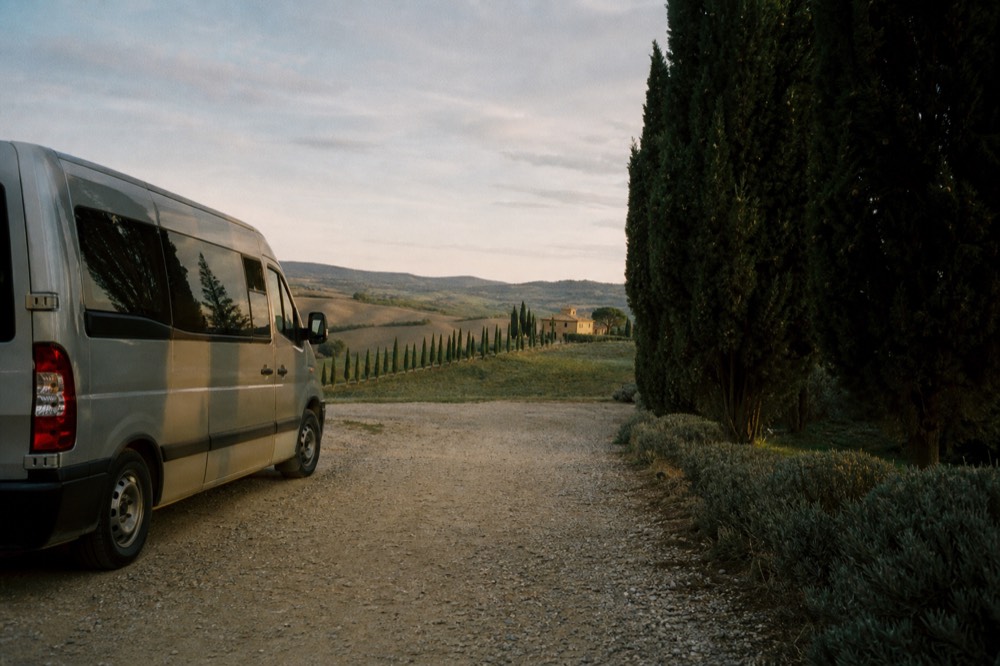
The farm day works on a different logic. Roughly five hours door to door sounds worse for a family and often plays better, because the shape of the day is broken up by movement. The van out of Florence is quiet, dark and rhythmic, which is the closest thing to a scheduled nap you will get on a trip, and the farm itself gives children somewhere to run when the kitchen stops being interesting. Gelato lands last, which is exactly where you want the strongest incentive. The Tuscan farmhouse format explained in full covers what the countryside options include beyond the cooking.
What is included for a family, and what do you still bring?
Aprons, ingredients, equipment and recipes come as standard across Florence classes, so you bring nothing. Drinks differ: the family class pours juice for children and wine for adults, the farm day includes wine and beer, and transport both ways is built into the farm price but not the city class.
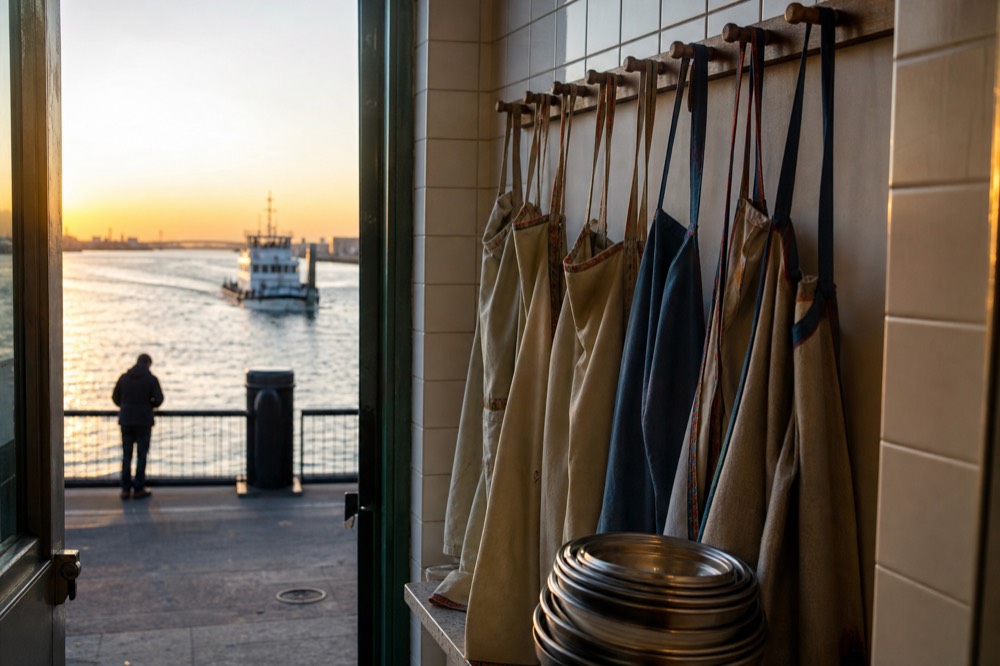
Nobody needs to pack anything for a Florence cooking class, which is the quiet advantage of the format over almost every other family activity in the city. There is no equipment to hire, no size to get right, no ticket window to queue at. The dress code across every Florence listing comes to the same two words: comfortable and closed-toe. Sandals are the only thing likely to be turned away, and that applies to children as much as adults.
| Family class ($57) | Farm day ($93) | Gluten-free class ($117) | |
|---|---|---|---|
| Apron | Included | Included | Included |
| Ingredients and equipment | Included | Included | Included |
| Recipes to take home | Not listed | Included | Not listed |
| Kids' drinks | Juice | Not listed separately | Water and sodas, unlimited |
| Adults' drinks | Wine | Wine and beer | Unlimited wine |
| Transport | Not included | From Florence and back | Included |
| Luggage storage | Not listed | Not listed | Included |
| Dessert | Tiramisu | Gelato | Not listed |
| Total door-to-door time | About 3 hours | About 5 hours | About 3 hours |
| Free cancellation | Up to 24 hours | Up to 24 hours | Up to 24 hours |
The third column is there for a reason families run into constantly: a dietary requirement inside the group. If one child is celiac, the honest answer is that a family class accommodating a gluten-free menu is not the same thing as a kitchen that keeps wheat out entirely, and only the $117 class does the latter. That is a real cost jump for a family of four, and it is the one case where we would tell a family to book the more expensive room.
What is the backup plan if the day goes sideways?
Free cancellation up to 24 hours before the start is the plan, and it is on every class on this site. Use it as an option rather than a refund: book the slot early, watch how the trip is actually going, and cancel the day before if your child is fried. Same-day changes are on the operator.
That 24-hour window is more useful than families realise, because it converts a booking into a decision you get to make later at no cost. Reserve the class on the day you build the itinerary. Then, the evening before, look honestly at how everyone is holding up. A family two days into a trip with jetlag is a different family from one on day six. Cancelling a $57 booking costs nothing; dragging a wrecked seven-year-old into a kitchen costs the afternoon and the goodwill.
| What went wrong | What we would do | Cost |
|---|---|---|
| Child is ill or exhausted the night before | Cancel inside the free window, rebook later in the trip | Nothing |
| Weather turns and you wanted the countryside | Swap the farm day for the three-hour city class | Difference in price only |
| Only one adult can go | The city class is easier solo with one child than the farm day | Nothing |
| Class is sold out on your date | Take a shorter 2h30 format, or move the day | Nothing |
| A dietary need surfaces late | Message the operator, or move to the celiac-safe kitchen | Price difference |
| Everyone is having a good day | Take the farm, the extra hours pay off when energy is high | Difference in price only |
One scenario is not on that table because it has no clean fix: arriving on the day with a child who refuses to participate. Chefs handle it better than parents expect, usually by giving the child a small independent job away from the main bench, and the meal at the end tends to reset the mood on its own. What does not work is forcing the rolling. A child who watches for an hour and then eats a plate of pasta they helped mix has still had a good afternoon, and the adults still get the class they paid for.
The second row is worth planning for in advance rather than reacting to. A farm day is a countryside day, and a family that has already committed the whole afternoon has fewer options than one holding a city class. If the forecast is good and the kids are game, check what your date has open on the farm before the city slots fill, since the countryside classes run on fewer departures. The farmhouse and countryside classes side by side show how the door-to-door timings differ between operators.
When should a family book, and how long is the day really?
Book as soon as your dates are fixed and cancel free later if needed. Florence peaks from mid-May through July and again in September, and quietens in August and from December to February. A three-hour class is a four-hour commitment once travel is counted; the farm day is a full one.
Seat scarcity in Florence is not really about the kitchens. The city runs its high season from mid-May to July and again in September, with the quiet stretches falling in August and from December through February. Against a baseline of 44,000 visitors a day that pushes past 80,000 at the summer peak, family-sized slots are the first thing to go, because a booking for four takes four seats from a room that might hold twelve.
One last piece of arithmetic that catches families out. A stated three-hour class is a programme length, not a door-to-door figure, and the meal at the end is not something anyone hurries. Budget four hours from leaving your accommodation to being back in it, and do not book a train, a timed museum entry or a restaurant table inside that window. How long a cooking class in Italy really takes breaks the timings down by format, and whether the class earns its place in a short trip answers the question most parents are actually asking.
If the group includes a celiac child, start from the kitchen rather than the price and check the celiac-safe dates first, because those seats are the scarcest of the lot. Everyone else can work down from our shortlist of the strongest classes in the city or scan every Florence class we compared in one place.
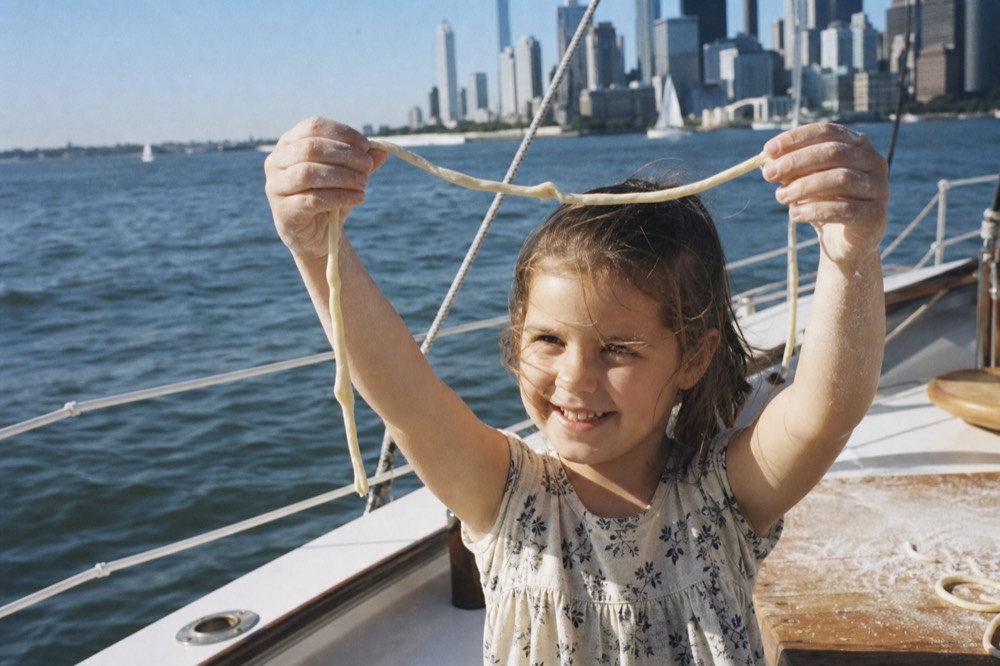
The measure of a good family class is not the pasta. It is whether the seven-year-old is still interested when the plates arrive, and that is decided by the shape they rolled and the dessert waiting at the end.