Mercato Centrale, Florence: Hours, Stalls and How to Eat It Properly
Two markets share one address: a 7am produce floor and a food hall that runs until eleven at night.

Short answer
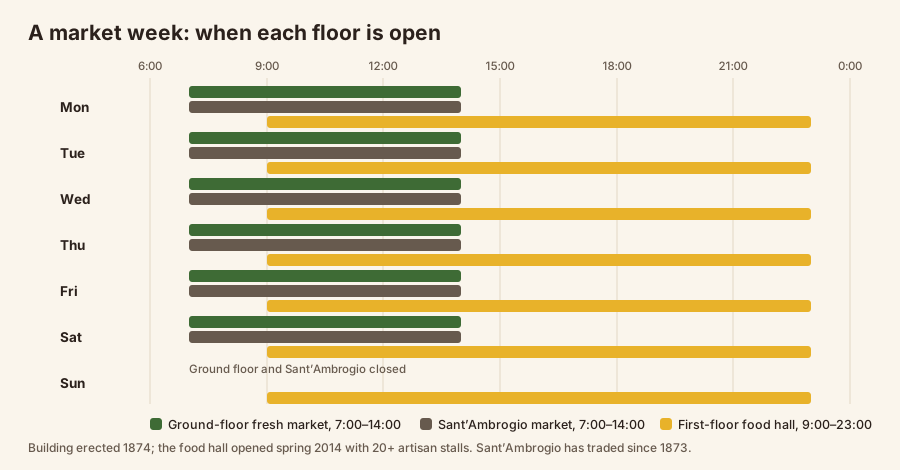
Mercato Centrale has two levels with different lives. The ground-floor fresh market trades Monday to Saturday, 7am to 2pm, and closes Sunday. The first-floor food hall, opened in spring 2014 with over 20 artisan stalls, is open every day from 9am to 11pm. The building itself went up in 1874.
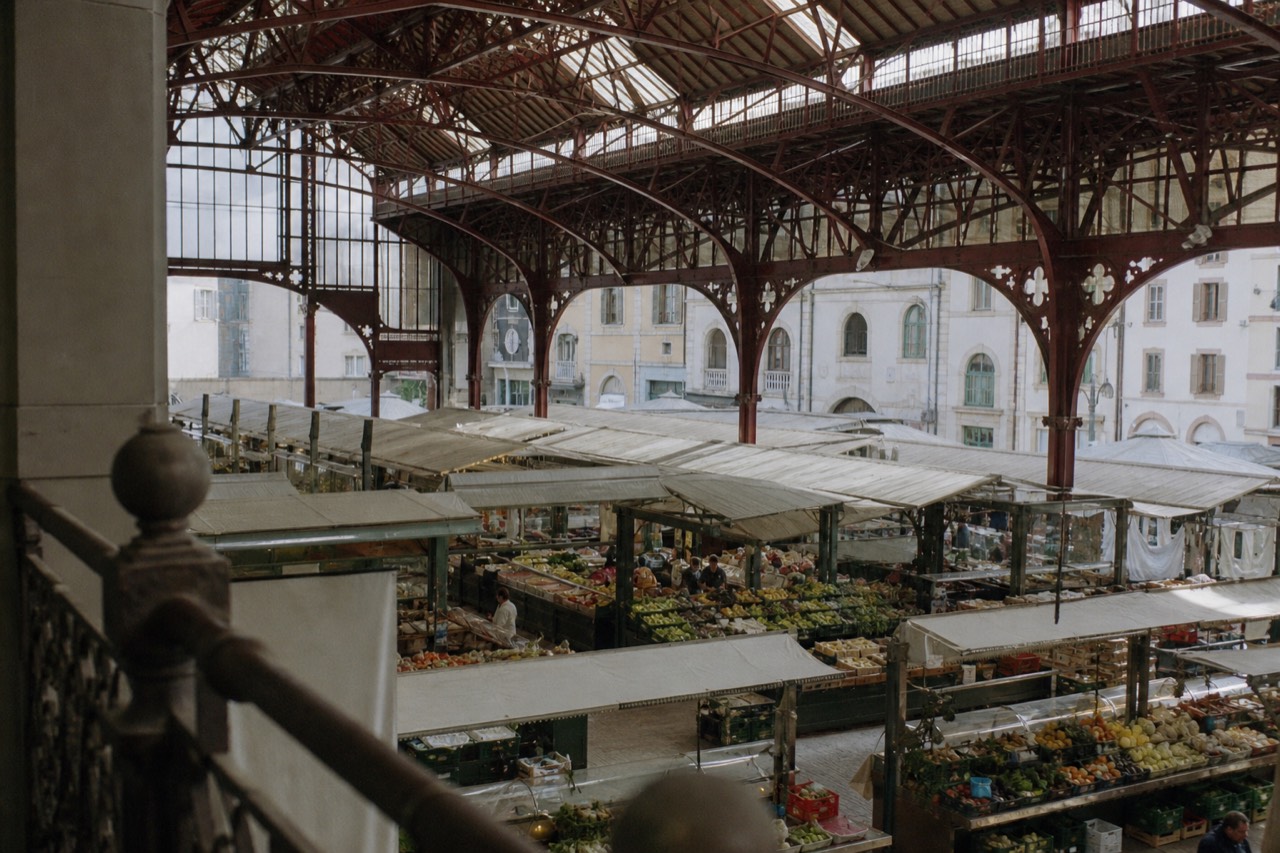
The iron columns go up two storeys and the light comes down through glass, which is why the ground floor of Mercato Centrale feels like a railway station that decided to sell fish instead. At half past seven on a Tuesday it is all crates and hosepipes and men shouting numbers. At half past seven in the evening the same building is warm, packed and smells of burning wood, except the crates are gone and everything is happening one floor up.
Most visitors only meet the second version. That is the food hall, and it is genuinely good. But it opened in 2014 and the building has been standing since 1874, and the older half of it is the reason the market matters and the reason Florence's cooking classes start their morning here.
The two floors keep different hours and exist for different reasons. This page covers both, plus the smaller market across town that most Florentines would send you to instead.
What is Mercato Centrale and why does the building matter?
Mercato Centrale is Florence's main covered food market, housed in an iron-and-glass hall erected in 1874 beside San Lorenzo. Its ground floor is a working fresh market of butchers, fishmongers and greengrocers. Its first floor, opened in spring 2014, is a food hall with over 20 artisan stalls.
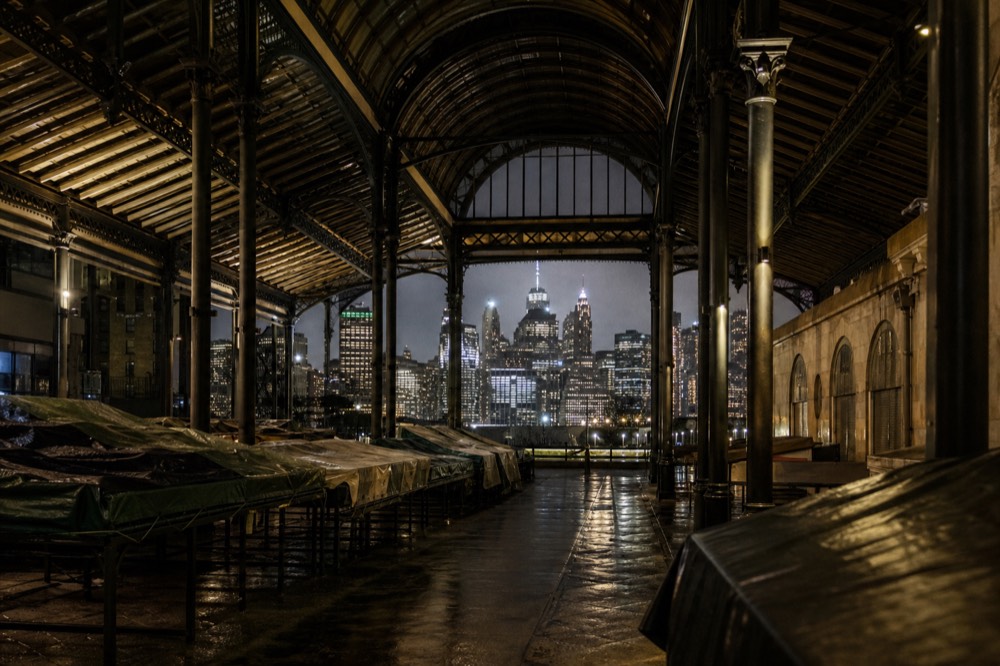
The nineteenth-century date is not trivia. Covered markets of this kind went up across Europe in the same decades, built from iron and glass because those materials could span a hall without interior walls and let daylight in over the counters. Florence got one when the city was briefly the capital of a newly unified Italy and was rebuilding itself accordingly. The structure you walk into has been doing the same job for over 150 years.
What changed in 2014 was the upper level. The first floor reopened as a food hall with more than twenty stalls run by artisans, each one narrow and specialised: one does pasta, one does meat, one does fish, one bakes. Shared tables sit between them. You order from three different counters and eat it all in one place, which is the modern format and it works.
The tension between the two floors is real and slightly funny. Downstairs is a market that would exist whether or not you came. Upstairs is a market that exists partly because you did. Both are worth your time; they reward different hours of the day.
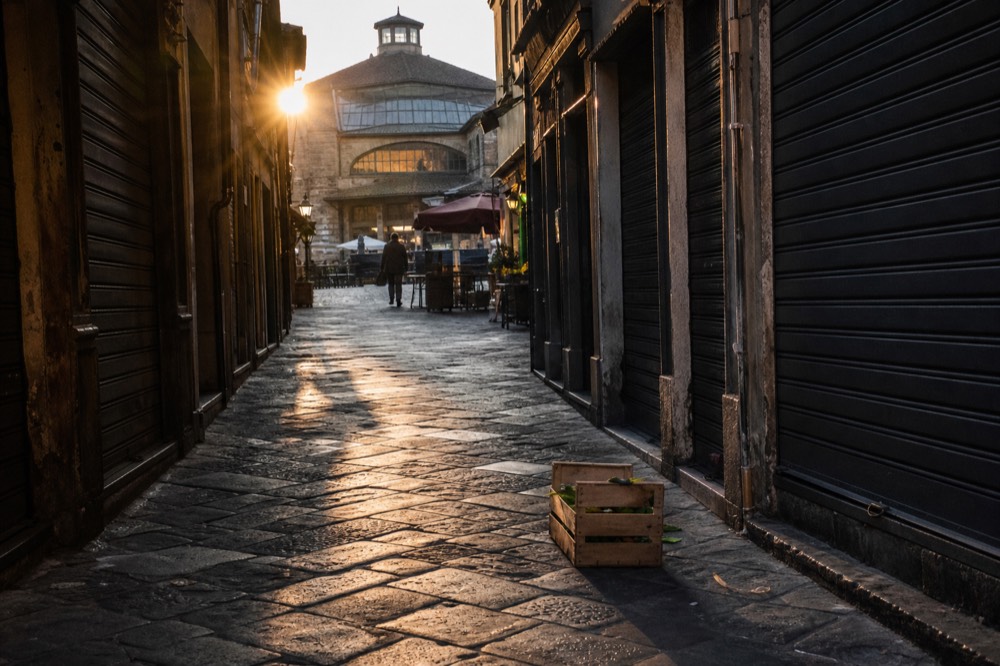
It helps to know what surrounds the building, because the approach shapes the first impression. San Lorenzo is a quarter of street stalls selling leather and souvenirs, and in the middle of the afternoon that outer ring is thick enough to convince a visitor the whole area is a tourist trap. Arrive at eight in the morning and those stalls are still folded away. The market is the oldest working thing on the block and it opens before everything around it.
Florence has grown busier around it. The city recorded 3.8 million international arrivals in 2024 and 9.8 million international overnight stays, and every one of those people has to eat somewhere. A building that once existed to supply Florentine kitchens now does two jobs, and the reason the schedules diverge so sharply is that the two jobs need different hours.
| Level | What it is | Opened | Feels like |
|---|---|---|---|
| Ground floor | Fresh market: butchers, fishmongers, greengrocers, cheese and cured meat | Building erected 1874 | A working trade floor, loud and wet |
| First floor | Food hall with over 20 artisan stalls and shared seating | Spring 2014 | A modern eating hall, busy at meal times |
| Both | One building, two schedules, two audiences | Different markets sharing an address |
The single most common mistake is arriving at four in the afternoon expecting a market and finding only the food hall. Nothing has gone wrong. The market half closed two hours earlier.
When is Mercato Centrale open?
The ground-floor fresh market opens Monday to Saturday from 7am to 2pm and is closed on Sundays. The first-floor food hall opens every day of the week from 9am to 11pm. If you want produce, fish and butchers, you have a seven-hour weekday window. If you want dinner, you have almost the whole day.
Those two schedules explain nearly every disappointed review of the place. A visitor turns up on a Sunday afternoon, walks into a lively food hall, and concludes that Mercato Centrale is a tourist food court. On a Sunday afternoon it is, because the other half is shut and does not trade on Sundays at all.
| Day | Ground-floor fresh market | First-floor food hall |
|---|---|---|
| Monday | 7am to 2pm | 9am to 11pm |
| Tuesday | 7am to 2pm | 9am to 11pm |
| Wednesday | 7am to 2pm | 9am to 11pm |
| Thursday | 7am to 2pm | 9am to 11pm |
| Friday | 7am to 2pm | 9am to 11pm |
| Saturday | 7am to 2pm | 9am to 11pm |
| Sunday | Closed | 9am to 11pm |
Two consequences for your planning. First, any experience that involves shopping the fresh market has to happen in the morning on a weekday or Saturday, which is why every market-based cooking class in the city is a morning class and why none of them run on Sunday. Second, the food hall is the most reliable late option in this part of town, open until 11pm every day, which makes it the obvious answer on the evening when nobody in your group wants to choose a restaurant.
Ground floor or first floor: which one do you actually want?
Go downstairs if you want to see how Florence feeds itself, buy cheese or cured meat to take home, or shop with a chef before a class. Go upstairs if you want to eat now, want choice, or are travelling with people who cannot agree on a restaurant. The downstairs window is narrow and the upstairs one is not.
They are not competitors. The failure mode is treating them as one destination with one visit. A morning spent on the ground floor and an evening spent upstairs are two different experiences of the same address, and doing both is a reasonable use of a Florence day.
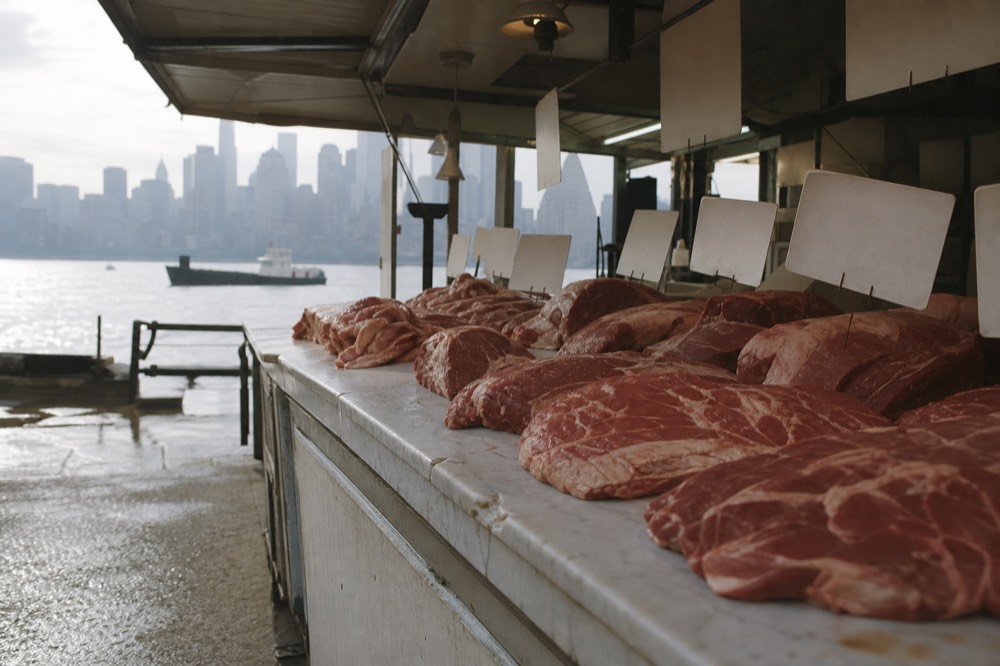
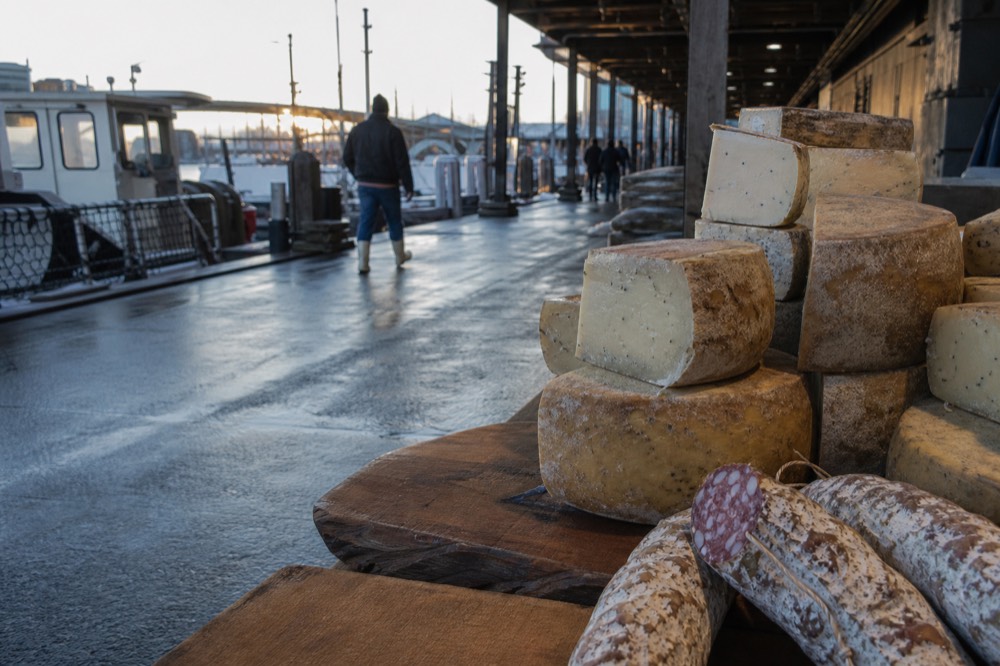
The ground floor rewards the traveller who likes provenance. Whole animals, fish on ice, cheese cut from the wheel, produce that changes with the season rather than the shipping schedule. You can buy things there. If your accommodation has so much as a kettle, a bag of vacuum-packed pecorino and some finocchiona makes better lunches than any panini queue in the centre.
The first floor rewards indecision, which is a compliment. Over twenty artisan stalls under one roof means the vegetarian, the person who wants fried fish and the one who came to Italy for pizza can all be seated at the same table in ten minutes. It is also, in practical terms, the most useful place in central Florence to eat at 10pm.
If you are shopping downstairs to take things home, three habits make it go better. Point rather than perform your Italian; the counters are fast and a gesture is understood everywhere. Ask for cheese and salami to be vacuum-packed if you are flying, since a sealed pack survives a suitcase and an open one does not. And buy oil last, because it is the heaviest thing you will carry and the market is not where you want to discover that.
The people who get the most out of the ground floor are the ones staying somewhere with a kitchen. Florence has tightened its short-term rental rules in the historic core, with no new authorizations issued in the central zones since June 2026, so apartment stays in the middle of town are a thinner market than they were. Wherever you are sleeping, even a hotel room absorbs a bag of pecorino, a piece of finocchiona and a knife you already own.
If the ground floor is the part you care about, the most efficient way to see it is with someone who buys there. That is the entire pitch of a market class: a guided walk through the stalls with tastings, then a kitchen and a multi-course meal at the end of it. See what the morning market class has open if your week has a weekday morning free, and browse the market-based classes on this site for the alternatives.
What should you eat at Mercato Centrale?
Eat Florentine rather than Italian. Lampredotto and tripe are the city's own street food, porchetta and finocchiona are the classic cured counters, and Tuscan pecorino is the cheese to compare across two stalls. Downstairs is where you buy those things; upstairs is where somebody has already cooked them for you.
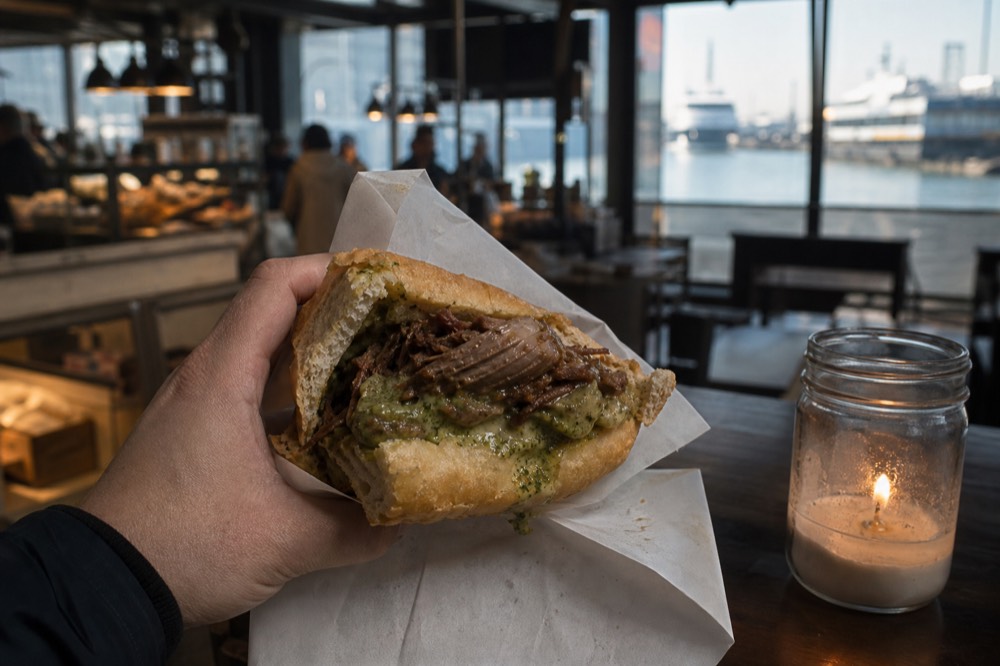
Florence has a genuinely local street-food tradition that has nothing to do with pizza, and it is built on the cheap cuts. Lampredotto, the fourth stomach of the cow, simmered and served in a bread roll with salsa verde, is the city's signature and it is sold from counters and carts around the market area. Tripe in tomato is its close relative. Both are traditional, both are ordinary Florentine lunch food, and both are the fastest way to eat something in this city that is not aimed at visitors.
| What | What it is | Where it sits | Worth knowing |
|---|---|---|---|
| Lampredotto | Slow-cooked cow's fourth stomach in a bread roll, salsa verde | Street counters around the market | The Florentine street food, not a novelty dish |
| Trippa alla fiorentina | Tripe stewed with tomato | Traditional counters and trattorie | Same tradition, eaten with a fork |
| Porchetta | Herbed, slow-roasted boned pork, sliced cold or warm | Cured meat counters | Central Italian classic, excellent in a roll |
| Finocchiona | Tuscan salami cured with fennel seed | Cured meat counters | The regional salami to take home |
| Pecorino toscano | Sheep's milk cheese, sold fresh through to aged | Cheese counters | Ask for two ages and taste the difference |
| Schiacciata | Flat, oiled Tuscan bread | Bakery counters | The bread everything else goes inside |
| Seasonal produce | Artichokes, tomatoes, mushrooms, winter greens by season | Ground-floor greengrocers | What is piled highest is what is in season |
Prices move and stalls change hands often enough that no printed figure survives long. The rule that holds is simpler: buy from the counter with a queue of people who are not photographing it.
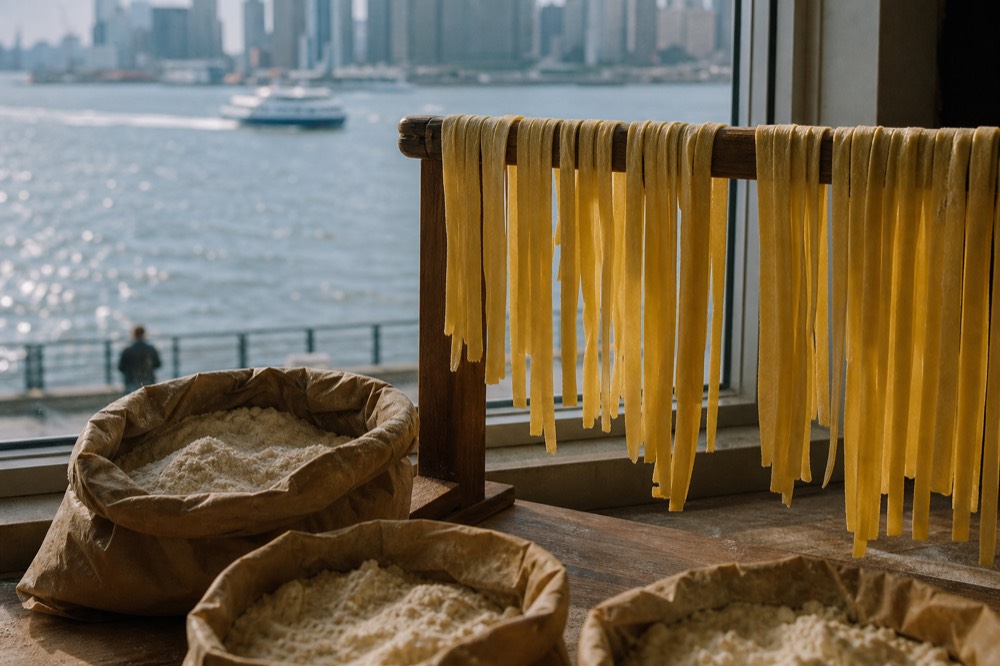
The pasta counters deserve a note of their own. Tuscany's own shapes are pici, the thick hand-rolled strand associated with Siena, and pappardelle, the broad ribbon, along with potato-filled tortelli from the Mugello north of the city. Visit Tuscany's regional rundown is the reliable reference if you want to know what you are looking at before a chef explains it to you.
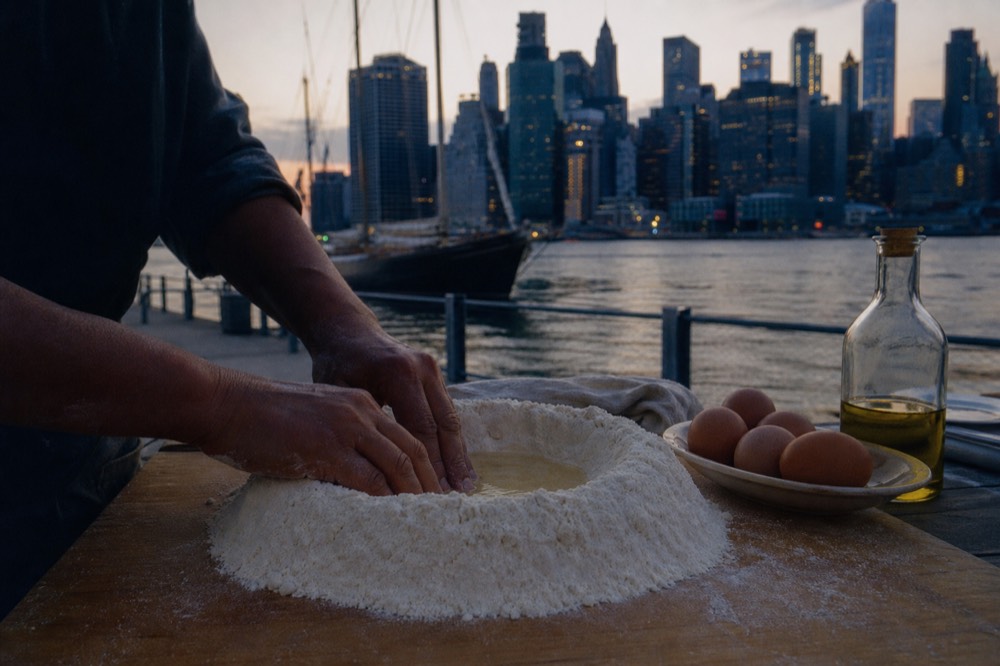
Flour is the other counter worth understanding, because it explains why the pasta upstairs tastes different from the pasta at home. Italian tipo 00 flour, milled from soft wheat, carries roughly 9 to 11 percent protein and is what egg pasta and pastry are built on. Semola rimacinata, ground from durum wheat, runs 13 to 14 percent and suits the water-based shapes. Egg pasta belongs to the north of the country, water and semolina to the south, and Tuscany sits between the two traditions and uses both. If a chef in a Florence kitchen puts a mound of pale, fine flour in front of you and cracks eggs into a well in the middle, that is the northern tradition and the choice was deliberate.
There is a national appetite behind all of this that is hard to overstate. Italy eats 23.3 kilos of pasta per person per year, the highest figure anywhere. The counters exist because the demand does.
Is Sant'Ambrogio the better market for locals?
Sant'Ambrogio has traded since 1873 and keeps the same hours, Monday to Saturday from 7am to 2pm, closed Sunday. It is smaller, has no food hall, and sits east of the centre away from the day-trip flow. If you want to watch a Florentine market work at ordinary speed, that is the one.
Calling it "the local one" is a cliché that happens to be accurate. The scale is domestic. There is an indoor hall and stalls outside it, the crowd is people doing their shopping, and nobody is upselling you a tasting board. It also has a second life as a lunch spot, which is a different and quieter proposition than the big hall at San Lorenzo.
| Mercato Centrale | Sant'Ambrogio | |
|---|---|---|
| Trading since | Building erected 1874 | Operating since 1873 |
| Fresh market hours | Mon to Sat, 7am to 2pm | Mon to Sat, 7am to 2pm |
| Sunday | Ground floor closed, food hall open | Closed |
| Food hall | Yes, first floor, daily 9am to 11pm, 20+ stalls | No equivalent |
| Size | Large, two levels | Smaller, hall plus outdoor stalls |
| Location | Beside San Lorenzo, in the visitor core | East of the centre, residential edge |
| Crowd | Visitors upstairs, trade downstairs | Mostly Florentines shopping |
| Go for | One-stop shopping, late eating, the building | Watching a market behave normally |
Neither market is a substitute for the other, and a food-led traveller with two mornings should use both. If you only have one, the honest answer depends on temperament: the big hall gives you more, the small one gives you truer. Sant'Ambrogio's own account of being the oldest market in Florence sets out its hours and history if you want to plan around it.
How do you get there, and when should you go?
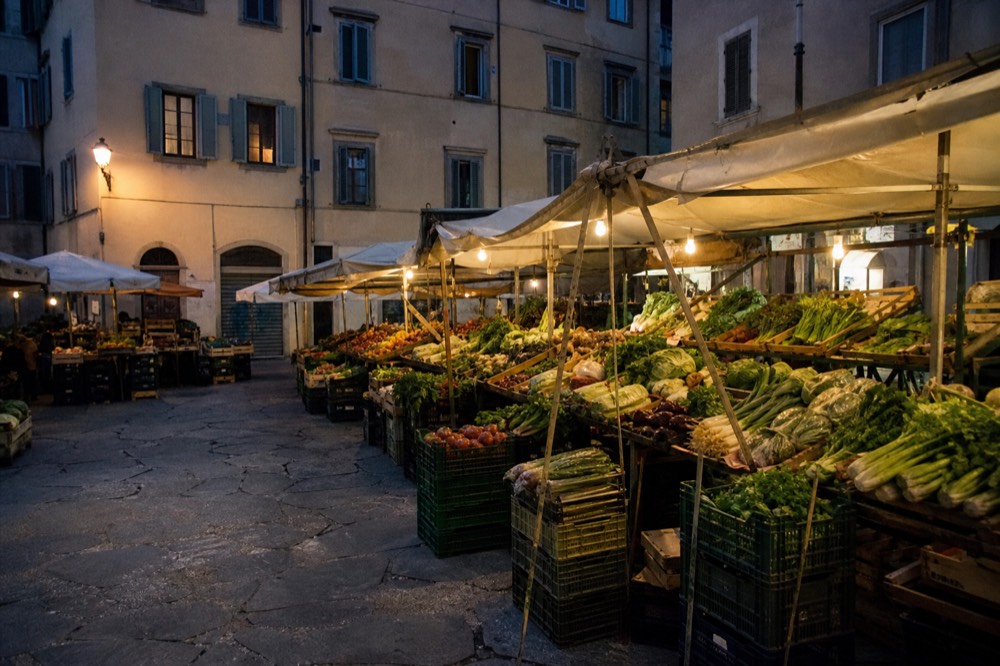
Mercato Centrale sits in the San Lorenzo quarter, an easy walk from the Duomo area and from Santa Maria Novella station. There is no ticket and no queue. The timing that matters is the hour: before 9am for the trade floor at full speed, after 7pm for the food hall at its best.
Central Florence is small and almost entirely walkable, which makes transport advice mostly redundant. The market is surrounded by the San Lorenzo street stalls, so the approach is busy with leather goods and souvenirs before you reach the food. Come at the market's opening hours and that outer ring is still asleep, which is one more argument for an early start.
| Coming from | How | Notes |
|---|---|---|
| Duomo area | Short walk | The market is a few streets northwest, past San Lorenzo |
| Santa Maria Novella station | Short walk | The nearest arrival point for day trips by train |
| Ponte Vecchio and Oltrarno | Walk across the river | Longer but still central, allow a slow stroll |
| Sant'Ambrogio | Walk across the centre | Doing both markets in one morning is realistic |
| Anywhere in the historic core | On foot | Driving into the centre is restricted and pointless here |
| Time of day | Ground floor | Food hall | Best for |
|---|---|---|---|
| 7am to 9am | Full trade, restocking, quiet of visitors | Closed until 9am | Seeing the market as a market |
| 9am to 11am | Busy, best selection, chefs shopping | Opening up, calm | Shopping and market classes |
| 11am to 2pm | Winding down toward the 2pm close | Filling for lunch | A late look plus lunch upstairs |
| 2pm to 6pm | Closed | Steady, easy to get a seat | An unhurried snack |
| 6pm to 11pm | Closed | Busiest, full run of stalls | Dinner without a reservation |
Florence is busiest from mid-May through July and again in September, with average daily visitor numbers around 44,000 across the year and over 80,000 in the peak summer months. In those weeks the difference between an 8am visit and an 11am visit is the difference between two entirely different rooms. August and the stretch from December to February are the quiet months, which is a real argument for a winter trip if markets rather than sunshine are what you came for.
A note on doing both markets in one morning, since people ask. It is entirely possible on foot, and the walk between them crosses the middle of the historic centre, which is no hardship. Start at Sant'Ambrogio while it is at its most domestic, cross west with a coffee somewhere in between, and finish at the big hall before the 2pm close. Do it in the other order and you will arrive at the smaller market as its stalls are packing up.
How does the market connect to the cooking classes that shop it?
One class on this site is built around a market walk: a 3h30 morning format from $58, rated 4.9 across 424 reviews, that tours a Florentine food market with tastings before cooking a multi-course meal. The rest start in the kitchen with the shopping already done, cost less, and run at more hours of the day.
That is the practical division. A market class buys you provenance and a guided walk; a standard class buys you more time with your hands in flour for less money. Both end with a plate you made. Every class on this site provides apron, ingredients and equipment, and every one of them cancels free up to 24 hours before it starts, which makes booking early a low-risk move rather than a commitment.
The market's hours put a hard edge on this. A class that shops before it cooks cannot start in the afternoon and cannot run on Sunday, so if your only free day is a Sunday, the choice has been made for you and it is a kitchen-only class. Check your dates against the trading calendar before you fall in love with the format.
| Class | Format | From | Rating | Length |
|---|---|---|---|---|
| Market Tour & Cooking Class with Wine | Market walk with tastings, then a multi-course meal | $58 | 4.9 (424) | 3h30, morning |
| Pasta & Tiramisu Class with Unlimited Wine | Kitchen only, pasta plus dessert | $49 | 4.9 (8,219) | ~3h |
| Fresh Pasta Course with a Ponte Vecchio View | Kitchen only, 2 shapes sauced two ways | $37 | 5.0 (608) | ~2h30 |
| Pasta Cooking Class with Unlimited Wine | Kitchen only, the volume favourite | $37 | 4.9 (14,815) | ~3h |
| Pizza or Pasta & Gelato at a Tuscan Farm | Out of the city, transport included | $93 | 4.9 (1,572) | ~5h door to door |
The Ponte Vecchio course is the one to look at if your day is already full, since it runs about two and a half hours and makes two pasta shapes sauced two ways, a Tuscan meat sauce and butter with sage. You can see dates and the current price for it, or check live availability for the version that adds tiramisu, which is the sensible pick if there is a sweet tooth in the group. For the wider view, the pasta and tiramisu pairings and the classic kitchen-only classes are grouped separately on the homepage.
If you want the long version of how a shopping morning turns into lunch, how the shop-then-cook morning runs walks through the format stage by stage. Our shortlist of Florence classes sorts the whole field, what a cooking class in Italy costs puts Florence prices against Rome, Venice and the Amalfi Coast, and the full Florence class lineup shows every option with its rating and review count in one table.
Go early, buy something you cannot get at home, and eat the lampredotto standing up. The market rewards the first hour more than the last one.