Private and Chef-Led Pasta Classes in Florence: When the Upgrade Is Worth It
The premium end of Florence's pasta classes is a different product, not a marked-up version of the cheap one.

Short answer
The chef-led masterclass runs $109.50 for three hours with a maximum of 13 guests, scoring 5.0 across 598 reviews, and it includes an apron you keep, a recipe e-book, red and white wine and a full meal. Most first-timers are better served by the $37 classic, which rates 4.9 across 14,815 reviews.
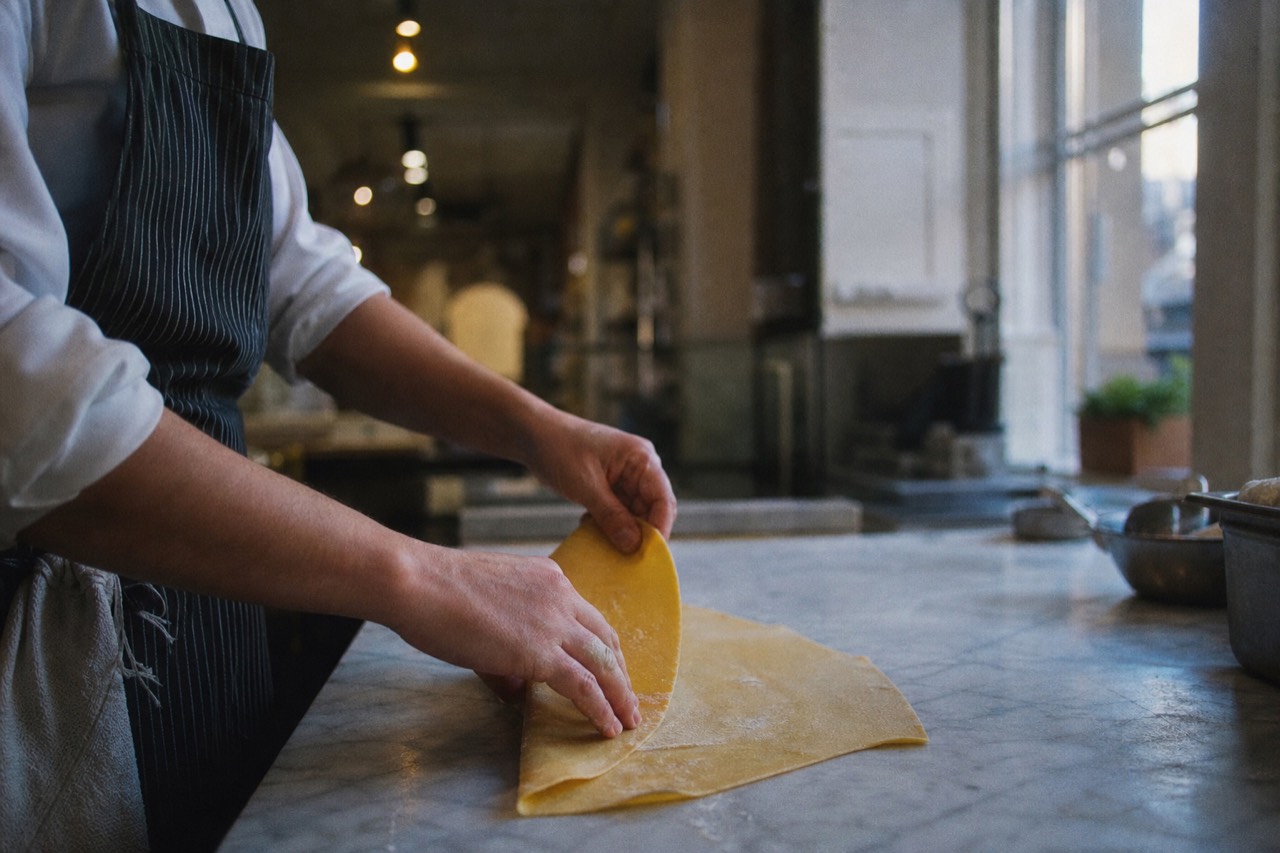
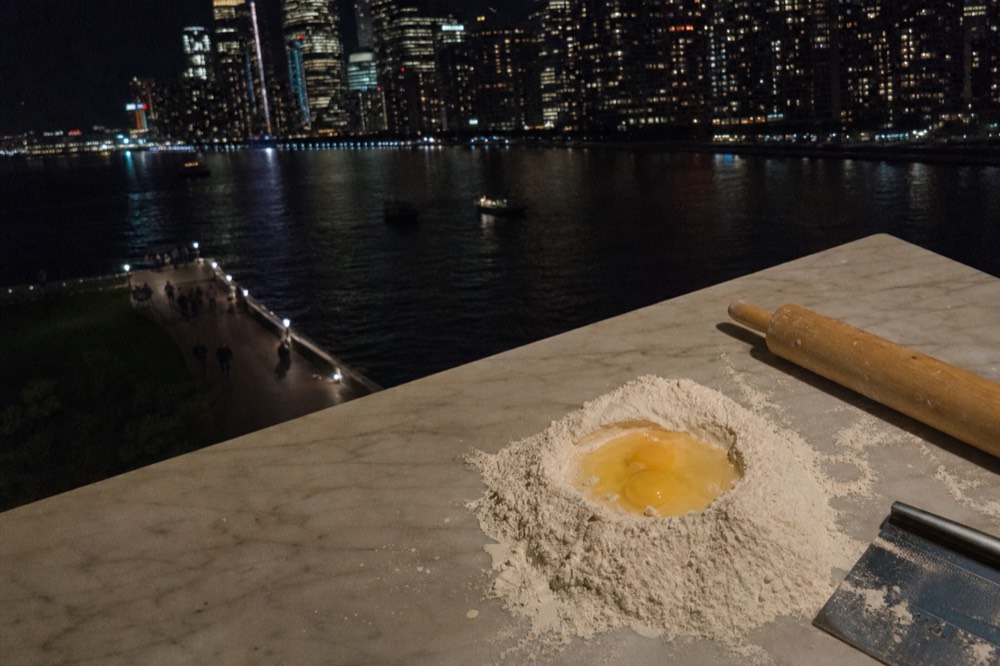
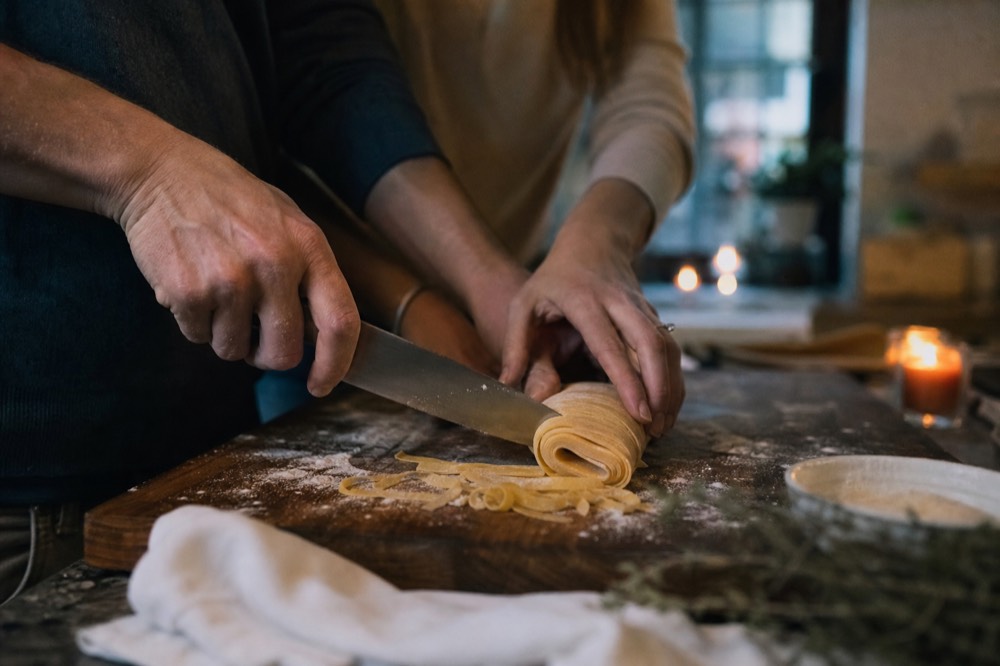
Flour goes onto the steel bench in a thin, even sheet. Someone presses a well into the middle with the heel of a hand, eggs drop in, and for ten minutes the room is quiet apart from the scrape of a bench knife against metal. That opening minute looks identical in a $37 class and in a $109.50 one, which is exactly why the price gap confuses people.
What separates the tiers is concrete: what the room holds, how long a chef can physically stand at your shoulder, what leaves the building with you at the end. The premium tier is real. It is not a markup on the same afternoon.
It is also the wrong buy for most travellers. Before a single table below, the honest answer is this: a first-timer who wants three hours, a plate of tagliatelle they made themselves and a generous amount of wine should book the $37 classic and spend the difference on dinner. The rest of this page is about the specific cases where that answer flips, and there are more of them than the price tag suggests.
What actually changes when a Michelin-trained chef runs the class?
Three things change: the published cap of 13 guests, the density of correction you get per hour, and what you carry home. The masterclass runs three hours at $109.50, rates 5.0 across 598 reviews, and includes an apron you keep, a recipe e-book, red and white wine, and a full lunch or dinner.
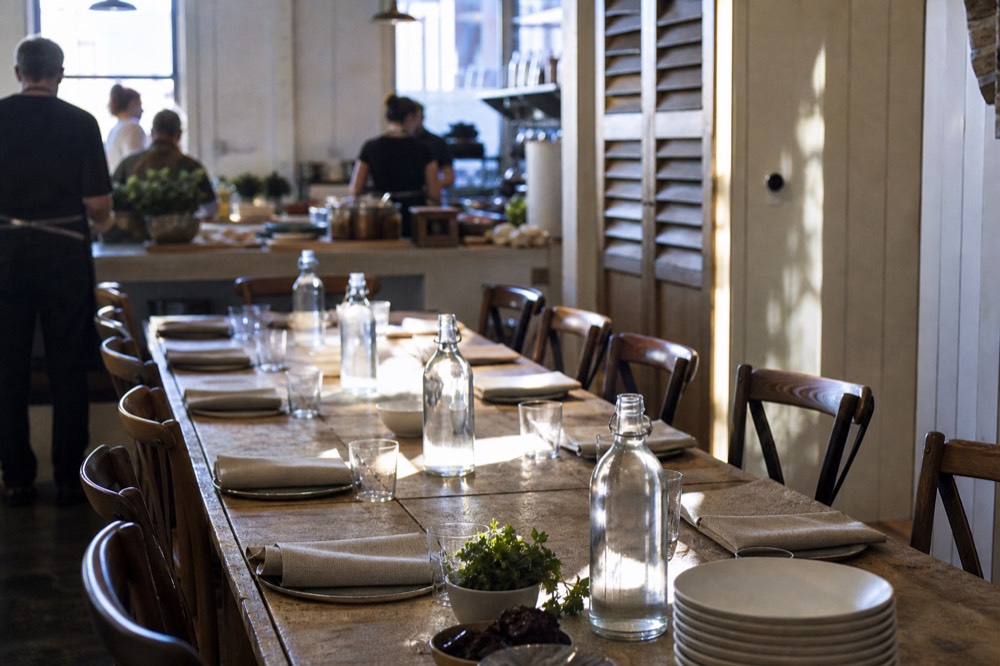
The cap is the part people underrate. Thirteen is a number the operator publishes on the listing, which almost nobody else in the Florence market does. Everything else in the city describes itself as small-group without committing to a ceiling, so you are buying a promise rather than a figure. When a chef has thirteen pairs of hands to watch across three hours, each guest gets roughly fourteen minutes of undivided attention if the chef splits the time evenly. Double the room and you halve that. Nothing else about the recipe changes.
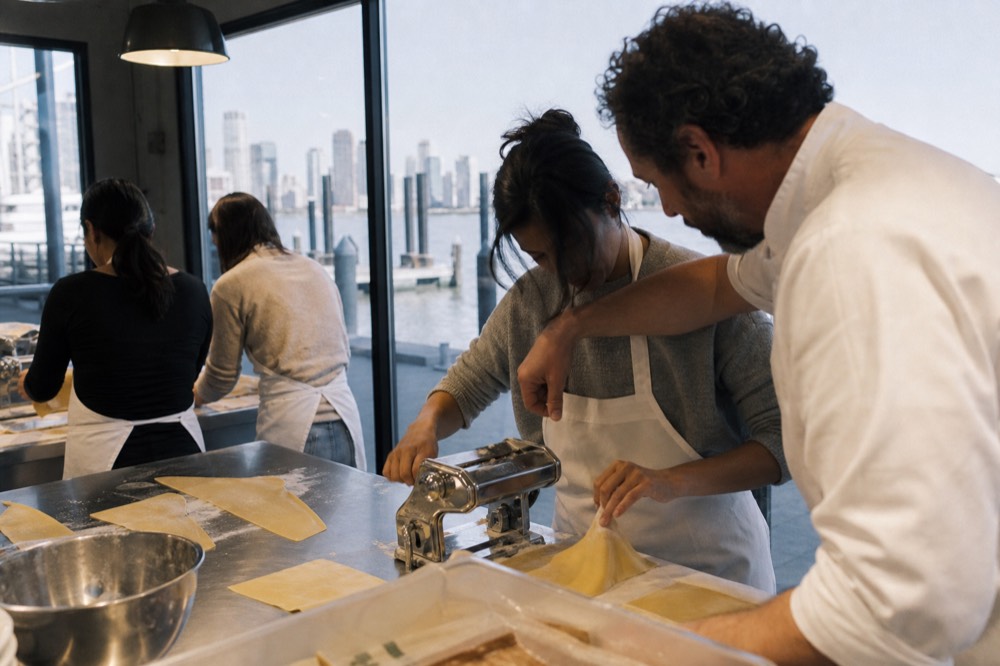
The second difference is what correction feels like. In a party-format class, the instruction is a demonstration you follow. In a capped masterclass, it is a loop: you roll, someone tells you the sheet is thick at the near edge, you roll again. That loop is the entire reason a technique sticks after you fly home, and it does not scale.
Third, the take-homes. The chef's listing itemises an apron you keep and a recipe e-book, which sounds like a gift-shop detail until you are standing in your own kitchen eight weeks later trying to remember the hydration. Every class on this site hands over apron, ingredients and equipment for the session. Only this one lets the apron leave with you.
What does not change is the rating gap, and we would not lean on it. The masterclass sits at 5.0 across 598 reviews. The big classic sits at 4.9 across 14,815. A 25-fold difference in sample size makes those two numbers far less comparable than they look on a card, and anyone selling you the upgrade on the strength of a tenth of a star is selling you noise. Book the premium for the cap and the e-book, not the decimal.
How does the masterclass compare with the $37 classic, line by line?
Same city, same three hours, roughly triple the price. The masterclass adds a published 13-guest cap, an apron to keep, a recipe e-book, red and white wine and an itemised full meal. The classic gives you unlimited wine, soft drinks and 14,815 reviews' worth of consistency for $37.
Set them beside each other and the shape of the decision gets much clearer than any review page makes it.
| Line item | Chef-led masterclass, $109.50 | Unlimited-wine classic, $37 |
|---|---|---|
| Rating | 5.0 | 4.9 |
| Reviews on file | 598 | 14,815 |
| Listed duration | 3 hours | around 3 hours |
| Published group cap | 13 guests | not published on the listing |
| Apron and equipment | provided | provided |
| Apron to keep | yes | no |
| Take-home recipes | recipe e-book | not itemised |
| Drinks | red and white wine | unlimited wine and soft drinks |
| Meal | lunch or dinner, itemised | you eat what you make |
| Free cancellation | up to 24 hours ahead | up to 24 hours ahead |
| Operator | Pasta Class Florence | Florence with Elvis |
Read down that column and the classic loses on precisely two lines: the cap and the take-homes. It wins on drink volume, and it wins enormously on evidence. Nearly fifteen thousand reviews is a different category of confidence from six hundred. If your worry is "will this be a bad afternoon", the cheap class has already been stress-tested by more travellers than most museums see in a week.
The wine line deserves a note, because it is the one people get wrong in both directions. Unlimited pours are a party feature, not a quality feature. If your group has come to Florence to laugh for three hours, that is a legitimate reason to pick the classic on purpose, and you can see dates and the current price without any of this analysis. If you want to remember how the dough felt, the two glasses in the masterclass are the better structure.
One structural note that applies to both: free cancellation up to 24 hours holds across every class on this site. That single policy is why the booking advice further down is so aggressive. There is almost no cost to holding a seat early.
What does the money actually buy per hour of instruction?
Divide the from-price by the listed duration and Florence's classes run from $12.33 to $39.00 an hour. The masterclass lands at $36.50, the big classic at $12.33. Nearly everything else clusters between $14 and $19, which is the real market, and the extremes are the outliers.
No operator publishes a cost per hour; this one is simply the from-price divided by the listed duration. It is still the fastest way to see the market at once, because duration varies more than the headline prices suggest.
| Class | From price | Listed duration | Cost per listed hour |
|---|---|---|---|
| Pasta Cooking Class with Unlimited Wine | $37 | ~3h | $12.33 |
| Pasta & Tiramisu Making with Unlimited Wine | $35 | 2h30 | $14.00 |
| Fresh Pasta Course with a Ponte Vecchio View | $37 | ~2h30 | $14.80 |
| Pasta & Tiramisu Class with Unlimited Wine | $49 | ~3h | $16.33 |
| Pastamania Pasta Class with Pasta Museum | $58 | 3h30 | $16.57 |
| Market Tour & Cooking Class with Wine | $58 | 3h30 | $16.57 |
| Pizza or Pasta & Gelato at a Tuscan Farm | $93 | ~5h door to door | $18.60 |
| Family Class: Fresh Pasta & Tiramisu | $57 | ~3h | $19.00 |
| Michelin-Trained Chef Pasta Class | $109.50 | 3h | $36.50 |
| Gluten-Free Pasta Class with Limitless Wine | $117 | ~3h | $39.00 |
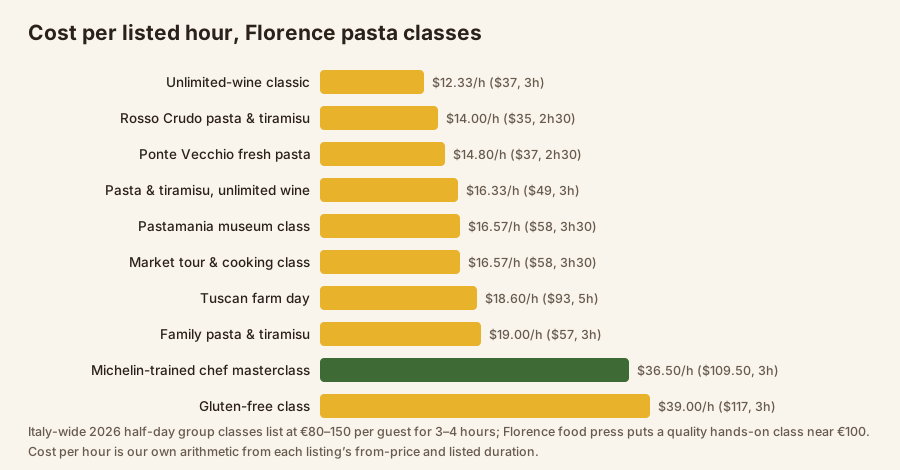
Here is the part that reframes the whole page. Industry pricing for 2026 puts a half-day group class in a city school across Florence, Rome and Bologna at €80 to €150 per guest for three to four hours including hands-on cooking and the meal. Florence's own food press puts a high-quality hands-on class in the city at around €100 per person as of 2026.
Convert loosely and the masterclass at $109.50 does not sit above the market. It sits inside it, at the level the market itself calls a quality class. The $37 seat is the anomaly. Platform competition has driven a floor in Florence that is far under what the city's own guides consider normal pricing for the format, which means the interesting question is not "why is the chef's class expensive" but "how is the classic that cheap, and what did it give up".
The answer, from the listings, is scale. Fifteen thousand reviews is a lot of rooms filled. Volume pricing works, and there is nothing dishonest about it, but it is worth knowing which side of the market line you are standing on before you decide the premium is a rip-off. City by city, what a class costs across Italy has the wider picture.
Is a private buyout better value than a capped group seat?
Usually not, on a per-head basis. Private at-villa classes in Italy run €110 to €180 per guest for a party of six, which is more per person than a group seat in a school. The capped masterclass at $109.50 buys you a published ceiling of 13 without paying private rates.
This is the most counterintuitive number in the whole cost picture: for small parties, going private costs more per head than the equivalent group school class, not less. A family of six booking a villa class is each paying roughly what a single seat in the chef's masterclass costs, and sometimes more.
| Format | Per-guest cost reference | Published cap | What you can realistically ask for | Best for |
|---|---|---|---|---|
| Private at-villa buyout, party of 6 | €110-180 per guest, Italy 2026 | you set it | menu changes, pace, your own questions all day | milestone trips, dietary control, groups already travelling together |
| Chef-led capped masterclass | $109.50 | 13 guests | technique correction, one or two off-menu questions | serious home cooks, couples marking something |
| Open group class in town | $35-58 | not published | the demonstration, plus whatever the room allows | first-timers, budget travellers, party groups |
| Farm group day from Florence | $93 | not published | the setting, the longer day, transport handled | families, second visits, groups wanting a day out |
Read that table as a warning about the word private. It signals exclusivity, and travellers read exclusivity as quality, but the two are not the same purchase. A private class buys you control: the menu, the pace, the right to stop the chef mid-sentence and ask why the dough is tearing. It does not automatically buy you a better chef, and for a party of two it is an expensive way to get attention you can also get from a room capped at thirteen.
The exception is when control is the actual requirement. Allergy management across a family, a group with wildly different skill levels, a milestone dinner where the timing has to fit around something else: those are control problems, and only a buyout solves them cleanly. Everyone else is paying a premium for a word.
While we are on private-chef economics, one etiquette figure travellers ask about constantly: tipping a private chef in Italy runs 5 to 15 percent of the total, with 10 percent typical for excellent service, and it is never obligatory because a service charge may already apply. Group classes are a different social contract, and nobody at a school class is counting.
What is actually included at each price level?
Every class on this site provides apron, ingredients and equipment, and all of them cancel free up to 24 hours ahead. Above that baseline the differences are specific: the masterclass adds a keep-the-apron souvenir and a recipe e-book, the farm and gluten-free classes add transport, and the market class adds a food-market walk with tastings.
The word "included" does a lot of quiet work on booking pages, so here are the itemised inclusions rather than the summary line.
| Class | Apron and kit | Apron to keep | Recipes home | Drinks | Extra built in |
|---|---|---|---|---|---|
| Michelin-Trained Chef Pasta Class | yes | yes | recipe e-book | red and white wine | lunch or dinner itemised, room capped at 13 |
| Fresh Pasta Course, Ponte Vecchio View | yes | no | not itemised | not itemised | 2 pasta shapes sauced two ways, Tuscan meat sauce and butter and sage |
| Pasta Cooking Class with Unlimited Wine | yes | no | not itemised | unlimited wine and soft drinks | the largest review base in the city |
| Gluten-Free Pasta Class | yes | no | not itemised | unlimited wine, water and sodas | fully celiac-safe kitchen, transport, luggage storage |
| Pizza or Pasta & Gelato at a Tuscan Farm | yes | no | recipes | wine and beer | return transport from Florence, gelato, countryside setting |
| Market Tour & Cooking Class | yes | no | not itemised | wine | Florentine food market walk with tastings, multi-course meal |
Three observations from that grid. The first is that "not itemised" is not the same as "not provided". Recipe packs and e-recipes are close to standard across the format in 2026, but only some operators write them onto the listing, and an unwritten promise is not a promise. If a recipe card matters to you, ask when you book.
The second is that transport is the most valuable hidden inclusion in the city. The gluten-free class and the farm day both fold it in, and the farm day also folds in luggage-free logistics because you are collected and returned. That converts an afternoon into a day you do not have to plan, which is worth more than most people budget for. We walk through the full countryside version in the farm day in the Tuscan hills.
The third is that the gluten-free class at $117 is the most expensive per hour on the list, and that is not a premium in the same sense as the masterclass. A dedicated celiac-safe kitchen means separate equipment, separate surfaces and a supply chain that cannot cross-contaminate, which is a genuine operating cost rather than a positioning choice. If someone in your group has celiac disease, that number is what safety costs, and you can check the celiac-safe class dates or read our fuller notes on the celiac-safe kitchen option.
Which occasion justifies the upgrade, and which does not?
Upgrade for a milestone, for a serious home cook, or when a dietary requirement makes control non-negotiable. Do not upgrade for a first Italian trip, for a group that mainly wants wine, or because 5.0 looks better than 4.9. For most first-timers the $37 classic is the correct booking.
We would rather talk someone out of the upgrade than watch them pay triple for an afternoon they would have enjoyed just as much at the entry price. Here is how we would actually spend it, occasion by occasion.
| Your situation | What we would book | From | Why |
|---|---|---|---|
| First trip to Italy, budget matters | Pasta Cooking Class with Unlimited Wine | $37 | 14,815 reviews at 4.9 is the safest three hours in the city |
| Anniversary or milestone for two | Michelin-Trained Chef Pasta Class | $109.50 | capped at 13, apron to keep, e-book, a proper sit-down meal |
| Serious home cook who wants technique | Michelin-Trained Chef Pasta Class | $109.50 | the correction loop is the product, and it needs a small room |
| Group of friends who want a party | Pasta & Tiramisu Class with Unlimited Wine | $49 | unlimited pours plus a dessert everyone photographs |
| Family with school-age kids | Family Class: Fresh Pasta & Tiramisu | $57 | built for mixed ages, juice for kids and wine for adults |
| Celiac in the party | Gluten-Free Pasta Class | $117 | a fully celiac-safe kitchen, plus transport and luggage storage |
| Second Florence visit, already did a class | Pizza or Pasta & Gelato at a Tuscan Farm | $93 | changes the setting rather than repeating the room |
| Short stay, want the view as well | Fresh Pasta Course, Ponte Vecchio View | $37 | 2h30, two shapes, two sauces, 5.0 across 608 reviews |
The two rows that people argue with are the first and the last. On the first: there is a real instinct to make the once-in-a-lifetime trip count by buying the best version of everything, and it is usually a mistake with cooking classes specifically, because the entry-level product in Florence is unusually good. On the last: the Ponte Vecchio course is half an hour shorter than most, which reads as less value until you have tried to fit a three-hour class into a day that also contains the Uffizi.
If you are still weighing the tier rather than the class, our sibling piece on whether the class earns its place in your trip tackles that question head-on, and how a masterclass differs from culinary school covers the other end of the ladder. For the party-format end, the tiramisu pairings are collected in the tiramisu add-on classes, and the whole ranked field lives in our ranked shortlist of Florence classes.
How far ahead should you lock a small-capacity seat?
Book the capped classes as soon as your dates are fixed, because free cancellation up to 24 hours ahead makes an early hold effectively free. A room of 13 fills from a much smaller pool of seats than a class carrying nearly 15,000 reviews, so scarcity bites first at the premium end.
No operator publishes how many sessions it runs in a week, so throughput is the only honest comparison available. The masterclass has 598 reviews on file against the classic's 14,815. Even allowing for a shorter time on sale, that is a fraction of the seats moving through the room, and a published ceiling of 13 is a hard physical limit on how many more can.
| Your situation | When to book | What to lock first | If you leave it |
|---|---|---|---|
| Fixed-date celebration | the moment flights are confirmed | the capped masterclass, then dinner around it | the date exists, the seat may not |
| Peak season, mid-May to July or September | weeks out | any capped or transport-included class | you take whatever session is left, not the one you wanted |
| Low season, August or December to February | a week or so out | the class, then work the day around it | the risk is a cancelled session, not a full one |
| Deciding once you are already in Florence | same evening for the next day | anything with free cancellation | premium and family formats go first |
| Party of six or more | earliest of all | seats together, or a buyout | groups rarely fit into what is left |
Florence season shapes this more than most cities. High season runs mid-May to July and again in September, with low season in August and from December to February. Average daily visitor numbers sit at 44,000 across the year and push past 80,000 in the peak summer months, which tells you what the historic-centre kitchens are absorbing on a July afternoon.
The practical version of all this is short. Hold the seat you want early, because holding costs nothing until 24 hours before. If the plan changes, cancel and rebook. The only booking behaviour that reliably costs travellers the class they wanted is deciding in Florence, in July, at nine in the evening, for the following day.
For the premium tier specifically, compare and then move: check what your date has open for the chef's masterclass, and if it is gone, the rest of the premium and private tier will show you what is left in the tier. If you have decided the entry price is the smarter call after all, the unlimited-wine classics compared side by side is the faster route, and check live availability for the Ponte Vecchio course if the shorter format suits your day better.
The cleanest way to hold both ideas at once: the $37 classic is one of the best-value three hours in Florence, and the $109.50 masterclass is priced exactly where Italy's own market says a quality hands-on class should be. Neither of those statements makes the other wrong. What decides it is whether you came to eat pasta you made, or to learn to make pasta, because only one of those needs a room small enough for a chef to reach you.
If you want to see the whole field before committing to a tier, the full Florence class lineup is laid out by category with the live prices attached.