Are cooking classes better in Rome or Florence?
Rome and Florence charge the same 80 to 150 euro for a half-day class in 2026. What actually differs is the dish canon, the market walk and how many kitchens compete.

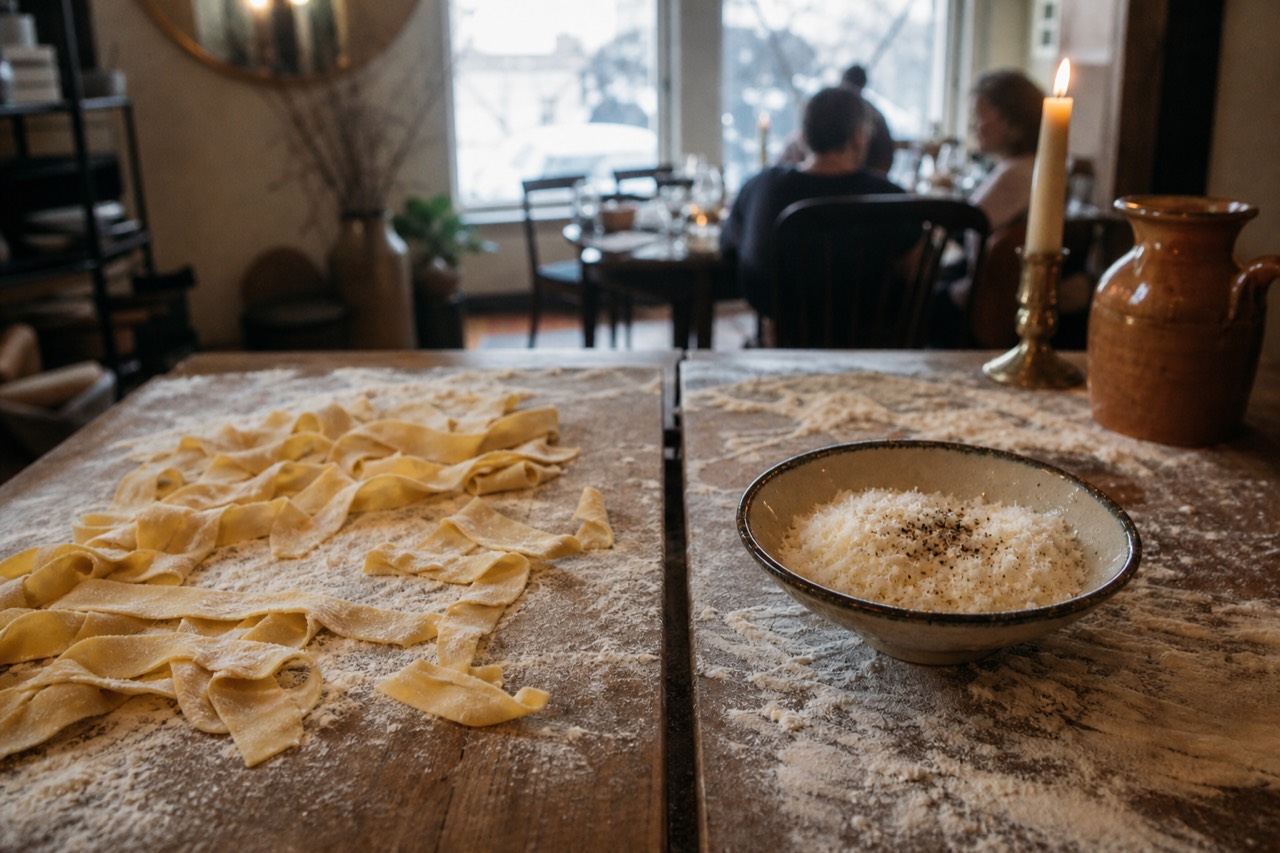
Ask this question in a Rome kitchen and you get a shrug and the word carbonara. Ask it in Florence and someone hands you a rope of pici and tells you to roll it thinner. Both answers are correct, and neither of them is really about quality.
Is one city actually better for a cooking class?
No. The 2026 price bands are identical: half-day group classes in city schools across Florence, Rome and Bologna run 80 to 150 euro per guest for three to four hours including hands-on cooking and the meal. The teaching standard is comparable. What differs is the repertoire and the number of kitchens competing for you.
The pricing data is the clearest way to settle the quality argument, because a market with a large price gap usually has a quality gap behind it. There isn't one here. Industry analysis of Italian cooking classes for 2026 puts Florence, Rome and Bologna in the same 80 to 150 euro band for the same format. When two cities charge the same for the same three hours, the honest read is that neither is systematically better, and anyone telling you otherwise is selling one of them.
That leaves a genuinely useful question in place of a fake one. Not which city teaches better, but which city's classes you actually want to have taken.
What does Florence do that Rome doesn't?
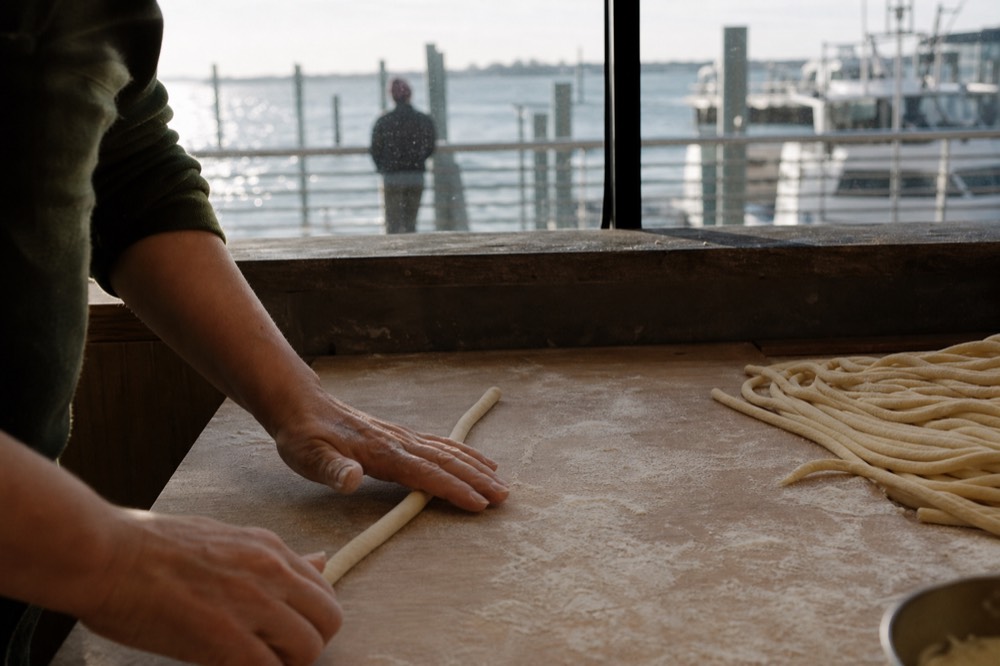
Two things. Volume, which means a Florence class carries far more accumulated review evidence than most Rome listings, and hand-rolled Tuscan shapes. Pici and pappardelle are made without a machine, so you leave having actually done the work rather than having fed dough through a crank.
The volume argument is not abstract. The busiest class in Florence holds 4.9 across 14,815 reviews, and that is one listing in a city where several others carry review counts in the thousands. Numbers on that scale do something specific for a traveller: they remove the gamble. You are not hoping a class is good, you are reading the verdict of fifteen thousand people who already went. Florence's density of kitchens is what produces those numbers, and it also drags the price floor down. Several well-reviewed Florence classes start under $40 for three hours with unlimited wine, which is beneath the bottom of the national band.
The shapes matter more than they sound. Pici is flour, water and oil rolled by hand, typical of Siena, and pappardelle are broad ribbons cut from a sheet you rolled yourself. Neither needs equipment you will never own. That is the difference between a class you can repeat at home and a demonstration you watched.
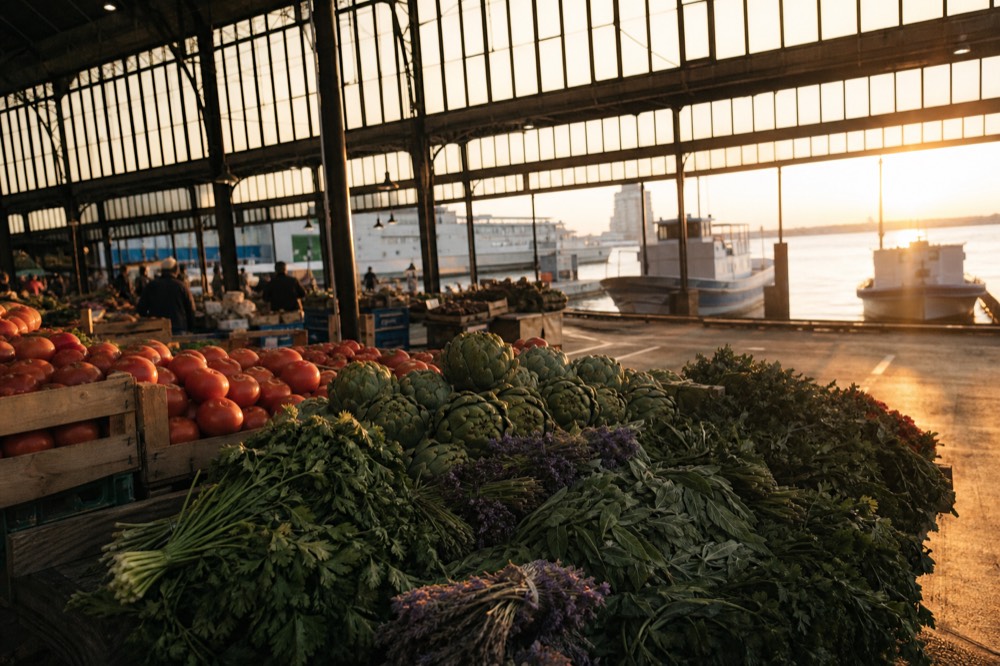
Then there is the market walk. Mercato Centrale sits a few minutes from most of the kitchens in the centre, with a ground-floor fresh market open Monday to Saturday from seven in the morning and a first-floor food hall running daily until eleven at night. A market-and-cooking format in Florence means a short walk, not a bus, and how Florence's covered market works lays out both floors and their very different hours. If that combination appeals, see dates and the current price and compare it against the unlimited-wine classics side by side.
What does Rome do that Florence doesn't?
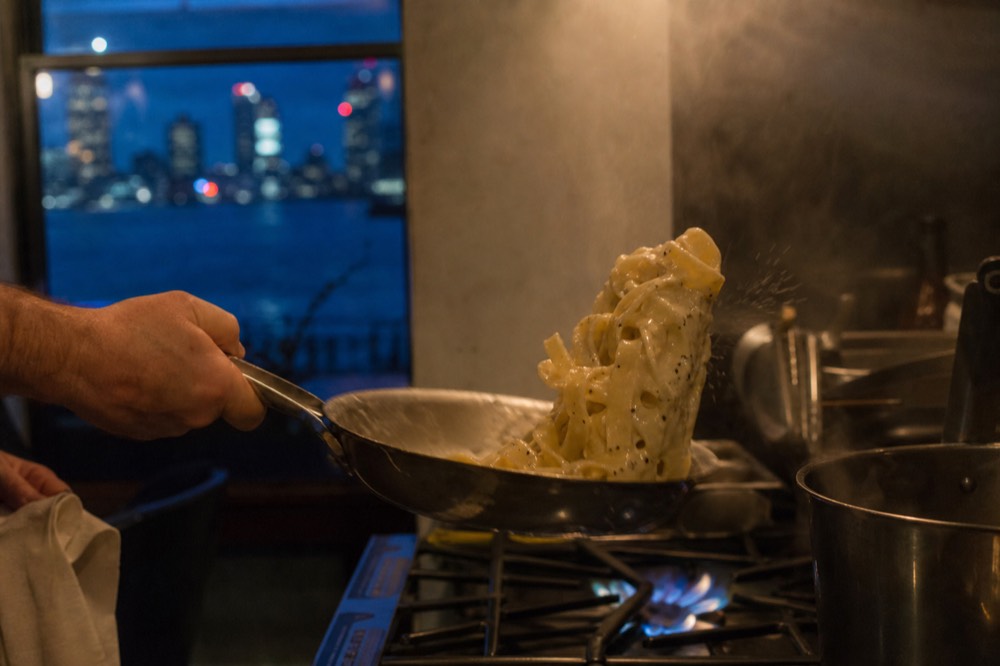
Rome teaches its own canon. Carbonara and cacio e pepe are Roman dishes, built on technique rather than shapes: emulsifying egg and cheese with pasta water without scrambling it. That skill transfers to any kitchen anywhere, and Florence does not teach it because it is not Tuscan food.
There is a real reason to pick Rome, and it is not scenery. The Roman classics are sauce problems, not pasta problems. Getting cacio e pepe to come together is a matter of heat, timing and water, and once you can do it you can do it forever with three ingredients you already have. A Florence class hands you a technique for making pasta. A Rome class more often hands you a technique for saucing it.
Italy's regional split runs underneath all of this. Egg pasta made with soft wheat flour dominates the north, while water-and-semolina pasta belongs to the south, and central Italy sits where the two meet. Rome and Florence are both in that middle band, which is why both cities can plausibly teach either tradition, and why the menu you get depends more on the operator than the postcode.
Which should you book if you only have one free evening?
Book in the city where you have more nights. A three-hour class is a four-hour commitment door to door, and it is worth more on a five-night stay than on a two-night stopover. If the nights are equal, Florence wins on price floor and review depth, Rome wins if you specifically want carbonara.
| Florence | Rome | |
|---|---|---|
| 2026 half-day group band | 80 to 150 euro | 80 to 150 euro |
| Typical length | 3 to 3.5 hours including the meal | 3 to 4 hours including the meal |
| What you learn to make | Hand-rolled pici, pappardelle, filled shapes | The Roman sauce canon, carbonara and cacio e pepe |
| Cheapest well-reviewed option we track | From $37, 4.9 across 14,815 reviews | Not in our lineup |
| Market walk | Central market a short walk from most kitchens | Depends heavily on the operator |
| Equipment you need at home afterwards | None, the shapes are hand-rolled | A pan and a lot of practice |
| Best reason to choose it | Depth of choice and evidence | You want one specific dish done right |
The market-tour format is the one case where Florence's geography gives it a hard edge, since a morning that starts among the stalls and ends over a multi-course meal only works if the market and the kitchen are walking distance apart. If that is the day you want, check what your date has open or browse the market-and-cook morning formats first.
One more Florence-only wrinkle: several kitchens here fold a dessert into the same three hours rather than selling it as a longer class, so pasta and tiramisu come out of one booking at 4.9 across 8,219 reviews. If that is the shape of evening you want, check live availability before you compare cities any further. The dessert-and-pasta double bills run at two price points, which is worth knowing before either city gets your evening.
Both cities will feed you well and teach you something real. If you are still torn, how the cost stacks up across Italy and which Italian city suits a class best widen the comparison beyond these two. For the Florence side specifically, the strongest kitchens in the city, ranked ranks them on evidence rather than price, and every Florence class on one page sits in one table.
The practical tiebreaker stays the same. Book the city where you will still be around the following morning, because a long lunch with wine is a much better afternoon than a train.