What to wear to a cooking class in Italy?
Comfortable clothes and closed-toe shoes. Aprons, ingredients and equipment are provided, so here is what to wear, what to avoid and what to bring.

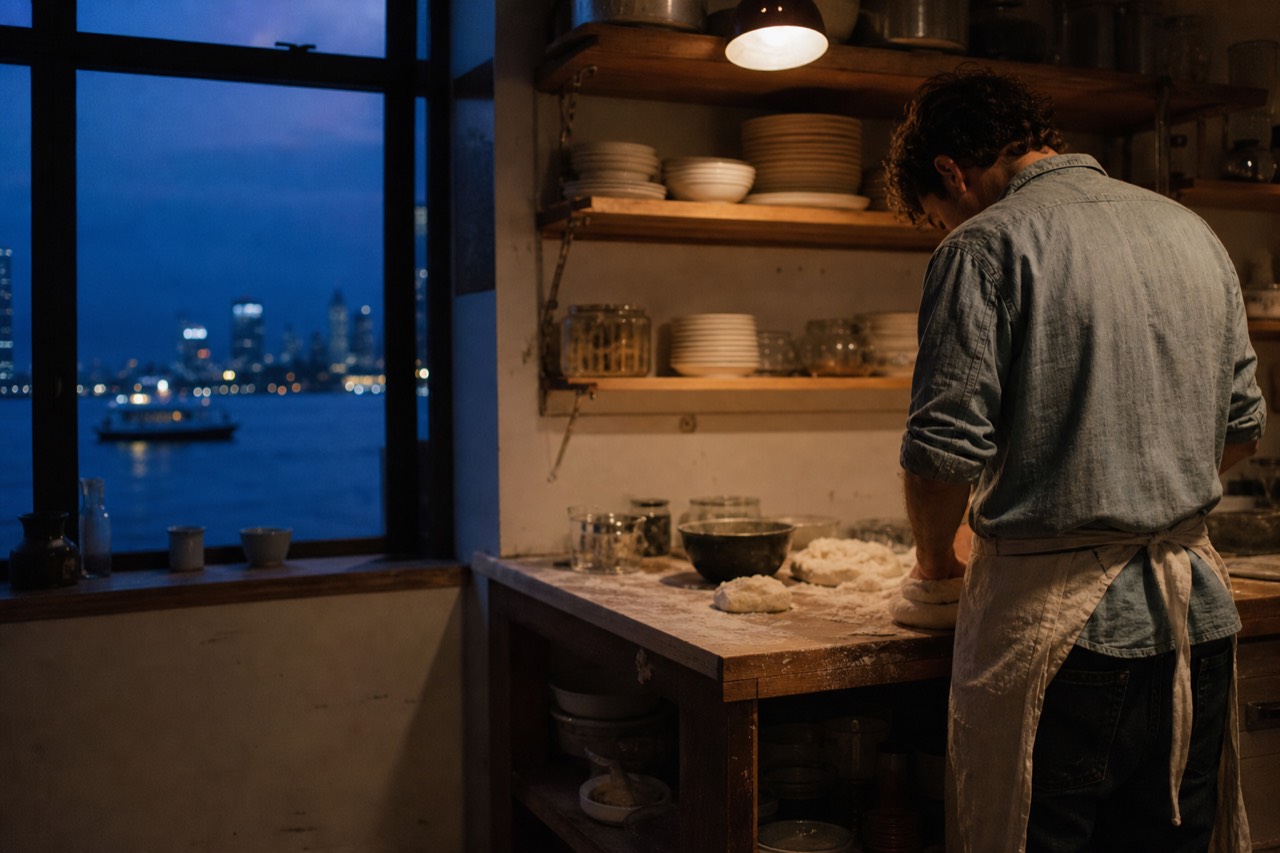
Flour behaves like a rumour. It gets onto a forearm, then a hip where you wiped your hand, then somehow onto the back of your shoulder, and by the time you sit down to eat there is a pale handprint on your jeans that you have no memory of making. That is the only real dressing consideration at an Italian cooking class, and it is a small one.
The rest is simpler than people fear. There is no dress code. Nobody checks. The listings across Florence say the same thing in the same flat language: comfortable clothing, closed-toe shoes, no formal requirements.
Is there a dress code at an Italian cooking class?
No formal dress code exists. The requirement across Florence listings is comfortable clothing and closed-toe shoes, and that is the entire instruction. Operators supply the apron, so your clothes are protected at the front. Nobody will turn you away for what you are wearing.
Closed-toe shoes are the one item worth taking literally. A working kitchen has knives, hot water and a floor that gets slippery, and sandals there are a hazard rather than a style opinion. Cooking schools in Florence state it plainly: comfortable clothes, closed shoes, nothing formal.
Everything else is comfort. You stand for much of a class that typically runs three to three and a half hours including the meal, so shoes you have already walked Florence in are the right ones. Dangling scarves and long open cardigans get in the dough.
| Wear | Avoid | Why |
|---|---|---|
| Closed-toe shoes you have walked in | Sandals, flip-flops, new heels | Knives, hot water, wet floors, hours on your feet |
| Jeans or casual trousers | White linen, anything precious | Flour transfers onto whatever your hands touch |
| A t-shirt or short-sleeved top | Long loose sleeves, wide cuffs | Sleeves end up in the dough or the sauce |
| A layer you can remove | Heavy jackets, thick jumpers | Kitchens get warm fast once the pans are on |
| Hair tied back if it is long | Loose hair over a work surface | Practical, and every chef appreciates it |
| A watch you can take off | Rings, bracelets, delicate jewellery | Dough gets into settings and does not leave |
| Nothing you need clean tonight | Your only good outfit | The apron covers the front, not the sides |
The apron is the part people do not expect. Every class on this site provides one, along with all ingredients and equipment, and the chef's masterclass sends you home with the apron plus a recipe e-book. Bring nothing to protect your clothes.
What actually gets on you?
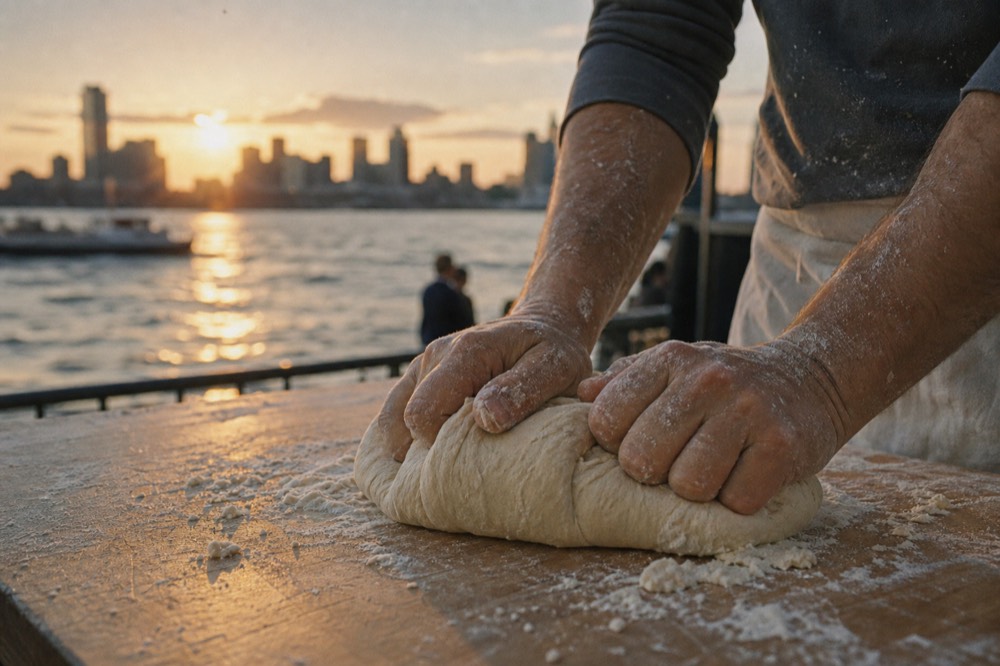
Flour, mostly, and it brushes off dry far better than it washes out wet. Egg is the other one, and semolina finds shoes. A well-tied apron catches the front of you. The parts that end up marked are forearms, hips and the tops of your feet if the floor gets busy.
Two flours are usually in play. Tipo 00, milled from soft wheat at around 9 to 11 percent protein, is very fine and drifts. Semola rimacinata from durum wheat is coarser and sits on fabric instead of sinking in. Neither stains the way oil does. The mistake is wiping flour off with a wet cloth mid-class, which turns dust into paste.
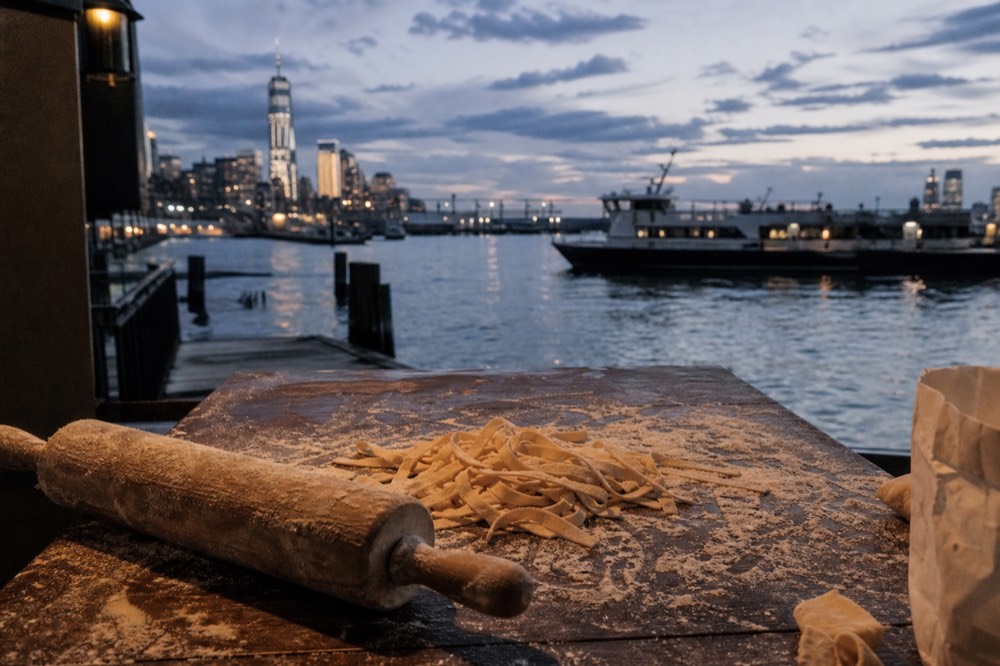
Wine is the other risk, and it is a real one, because several Florence classes are unlimited-wine formats where a glass sits next to your board for three hours. Red wine on a light shirt is the outcome nobody plans for. Dark clothes are not a rule; they are just insurance.
What should you bring to a cooking class?
Nothing, essentially. Ingredients, equipment and aprons are provided, and recipes are usually sent afterwards, so you need only yourself and an appetite. Bring a phone for photos and a hair tie if your hair is long. Skip the notebook, since your hands will be covered.
Come hungry. This is the practical detail travellers most often get wrong: a class is not a demonstration with a tasting at the end, it is a full meal you cook and then sit down to eat, usually with wine included. Booking a class for 6pm and a restaurant for 9pm is a scheduling error.
A few small things earn their place in a pocket. A hair tie. A phone, because you will want the photo of your own pasta on the drying rack, an instinct that is the whole engine behind the classes people film for social feeds. And on a departure day, check whether the class handles luggage: the celiac-safe class includes storage and transport, which turns the gap between check-out and a train into a usable afternoon.
Children need the same short list. The family classes built for small hands still expect closed shoes and clothes nobody minds flouring, since a six-year-old stands at the same bench as everyone else.
Does the season change what you wear?
Only in what you arrive in. Kitchens run warm year-round once the water is boiling, so a removable layer matters more than the forecast. Florence peaks from mid-May through July and again in September, when you will be walking to the class in real heat, and August through February is the quieter, cooler stretch.
In summer, plan for the sequence rather than the kitchen. You walk across a hot city, arrive wilted, then stand next to pans. Florence sees around 44,000 visitors a day on average and over 80,000 at the height of summer, so the walk to your meeting point in July is not a gentle one.
Winter flips it. You arrive cold in a coat, then need somewhere to put the coat, which most kitchens have but not all of them advertise. Seasonal guidance for Florence puts the low season at August and December to February, which is also when a warm kitchen with unlimited wine is the most appealing thing in the city.
What about the evening after the class?
Italians dress up more than most visitors do, so if the class runs in the afternoon and you have plans afterwards, wear something you would be comfortable being seen in. Nobody in the kitchen cares. The bar you walk into at nine o'clock is a slightly different audience.
Here the honest answer is cultural rather than practical. Florentines take presentation seriously, and jeans with a floured hip read fine in a kitchen and less fine at an aperitivo. The fix is a spare top in a bag, or booking the evening slot so the class is the last thing you do.
If you would rather be out of the city entirely, the farm class runs about five hours door to door with transport both ways, which means walking boots make more sense than city shoes. You can see what the farm class has open, and the half-day farmhouse options explain what the extra hours buy.
For most people the answer is the straightforward city class: about three hours, hands in the dough, a glass that keeps getting refilled. Check live availability for the one with nearly fifteen thousand reviews behind it, then compare it against the classic pasta classes grouped on our homepage. If someone in your party is celiac, the dedicated class runs a fully gluten-free kitchen and you can see dates and the current price for it, with more detail in our guide to the celiac-safe kitchen.
Two more questions usually follow this one: whether you tip at the end, and how long a class actually runs once the eating is counted. Every class in Florence side by side shows the prices, ratings and lengths in one table.
Wear the jeans. Tie back the hair. Leave the good shirt at the hotel and eat the pasta while it is hot.